
• Don't miss our webinar: Take Your Omnichannel CX to New Heights: How Spirit Airlines Is Upgrading Self-Service with Agentic AI  Watch now -->

Customer Journey Mapping 101—With Examples!

Key Takeaways

  • Modern customer journeys are usually multi-channel: Customers interact with brands across many touchpoints (e.g., web, chat, social, SMS), and their paths are rarely linear.
  • Customer journey maps reveal gaps and opportunities: Building visual customer journey maps helps brands spot missing messaging points, redundant efforts, or customer drop-offs.
  • Messaging at every stage boosts engagement and retention: Proactive messaging can reduce customer “bounces,” support non-linear decision paths, and even win over advocates before purchase.
  • Map, strategize, iterate: After mapping, align messages with each stage, decide which channels to use, deploy them, then monitor performance and adjust.

Do you know what your customer journey looks like? (Hint: It’s not as simple as it used to be!)

Back before the ubiquity of online shopping (we like to call it the stone age), the customer journey was fairly simple.

So your maps looked something like this:
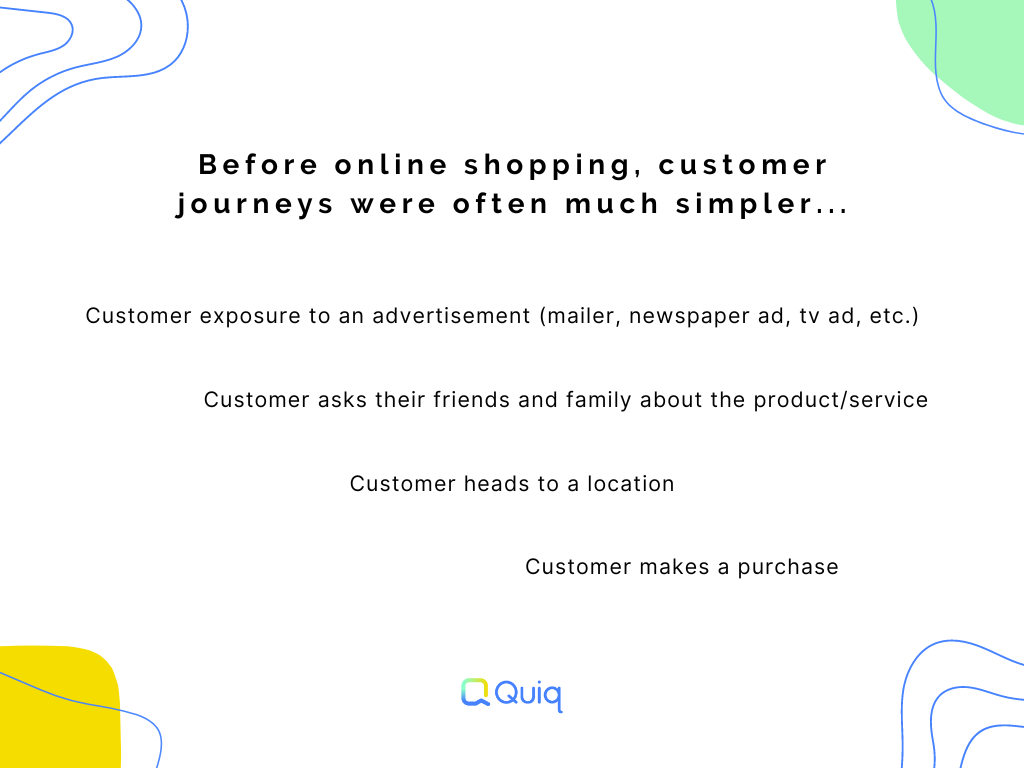
Pre-online shopping customer journey

It’s pretty linear, right?

Now, the customer journey is much more complex, and customer mapping needs to be an even bigger part of your marketing and sales processes.

Before we dive into how to use your customer journey map, let’s take a step back and learn what it is and how to build your own.

What is a customer journey map?

A customer journey map (sometimes called the buyer journey or user journey) is a visual diagram that charts every customer touchpoint with your brand. This can include in-person interactions, visits to your website, social media DMs, exposure to Google search ads, etc.

You see how quickly things get complicated.

The average customer uses ten channels to communicate with businesses, reports Salesforce. And not all customers are going to take the same path. It’s best to segment customers or specific customer journeys (for example, the journey through purchasing online goods vs. in-store services) to narrow how each group interacts with your brand.

Why should you create a customer journey map? It helps you see your brand experience from your customers’ perspectives. What messaging points are missing? Where are you oversaturated? Is there a gap in customer service coverage? You can answer all of these questions and more with a detailed customer journey map.

There are four common types of customer journey maps:

1.  Current state

This focuses on what you currently have in your customer journey today. It’s the most widely used since you can see the gaps in your current process.

Here’s an example of a narrow-focused current state customer journey map from Spotify. They specifically tracked the music-sharing experience to see how they could make it better for their users.
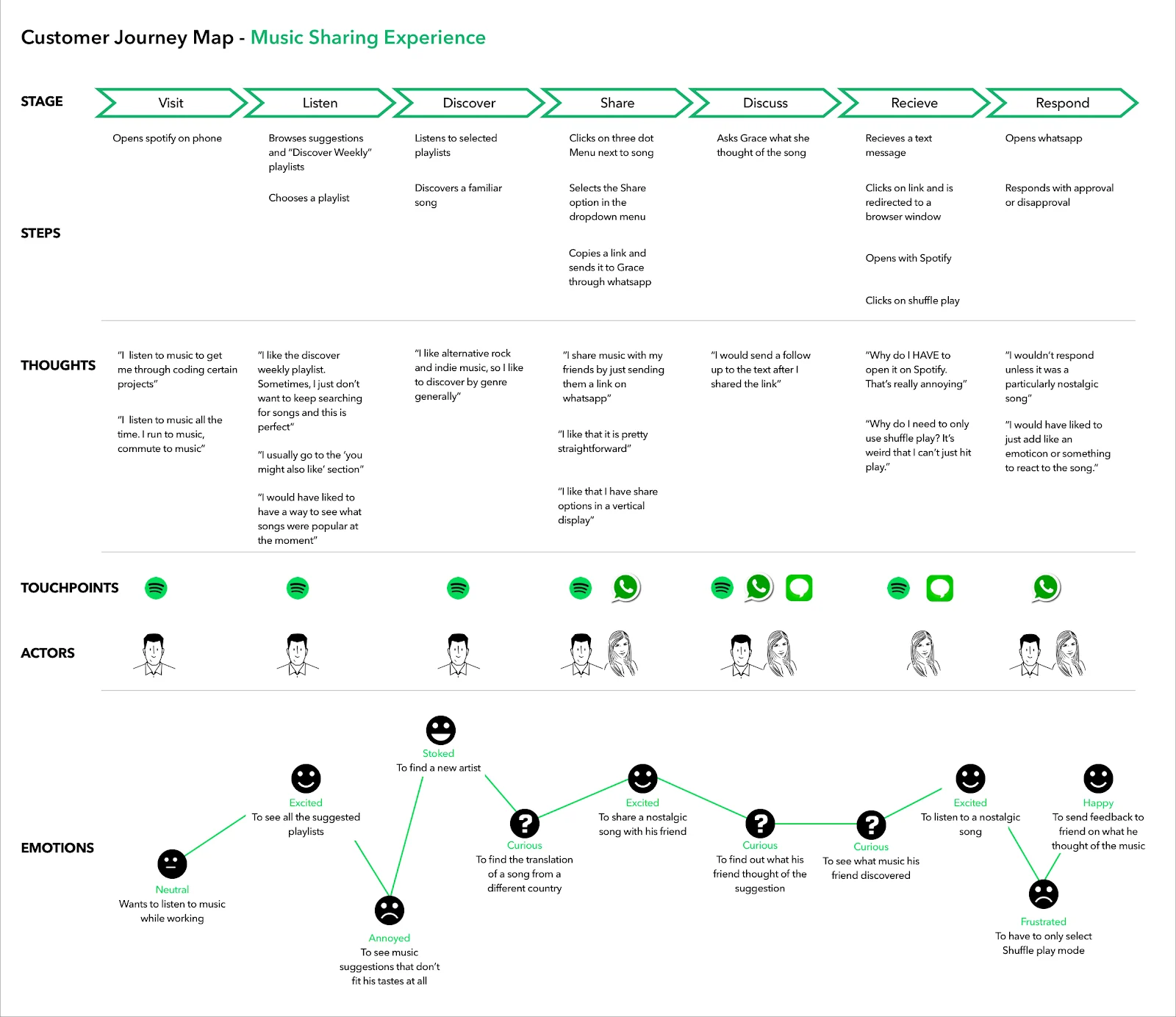
spotify customer journey mapping example

2. Day-in-the-life

This type of map details thoughts, actions, and emotions your customer goes through in a day, whether it includes your company or not. It’s helpful when conducting market research and identifying customer pain points.

3. Future state

Use future state customer journey maps to identify how your customers will act, feel, and think in the future. It’s helpful when creating product roadmaps or making significant changes to the overall customer journey.

This Carnegie Mellon future customer journey map details what they want their students to feel between admission and their first day in class, including the changes the team wants to enact to make it happen.
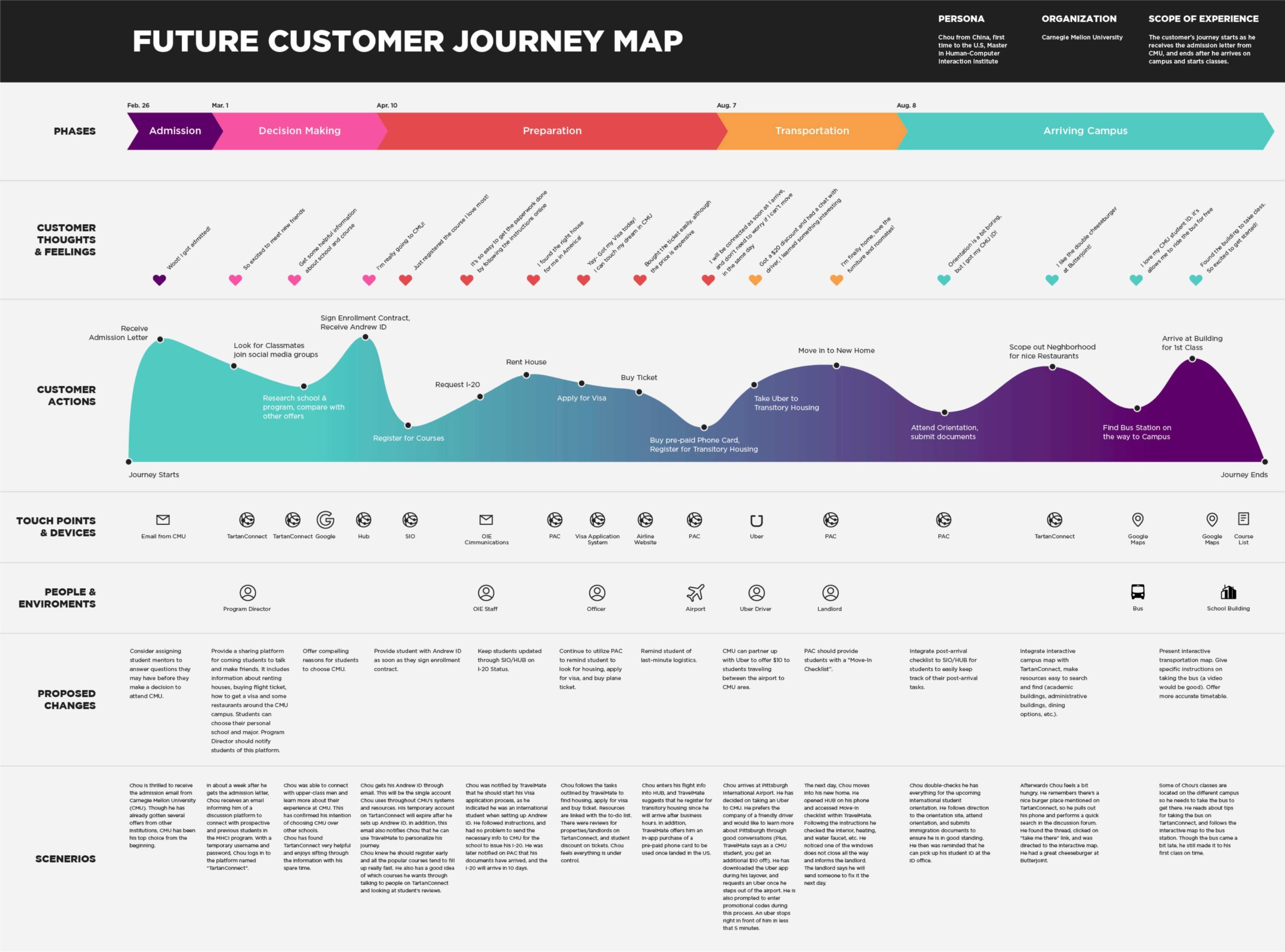
customer journey

See the PDF version here.

4. Service blueprint

A service blueprint typically works in tandem with one of the other customer journey maps. You start with a current or future state map and layer on everything responsible for building that journey, including people, processes, technology, etc.

When you’re just getting started, a current state customer journey map will be the most helpful in creating a high-level, end-to-end visualization.

How to build your customer journey map.

Ready to build one of your own? Here are five steps to get you started.

1. Determine your goals.

What are you measuring? Do you want a full picture of your entire customer journey, or are you looking to solve a specific problem? In the Spotify example above, they mapped the customer journey of sharing music with friends. Once they charted the entire journey, they could see where they should place share buttons to be more visible and to create a better user experience.

You can also measure customer service touchpoints to identify more opportunities to engage with customers.

2. Research your customer journey.

Use surveys and interviews to determine how your customers interact with your brand. Compare this with data from your Google Analytics and other customer tracking software to create a complete view of the customer journey.

Don’t forget to ask your customer service and sales team about their interactions with customers. Find out which questions they get most and how knowledgeable customers are when they reach out. That’ll help you figure out when customers reach out and what information they need to know sooner in the process.

3. Go through it yourself.

Yes, you have more familiarity with your brand than your customers. However, walking through the process will show you exactly what’s not working. Step into your customers’ shoes, and maybe it’ll spark some ideas on what can make it better.

4. Build a map for each of your goals.

Time to start building! Pick out your buyer personas and map each one, paying close attention to patterns.

With your research in hand, connect customer touchpoints with intent. From left to right (or even in a circle), describe each customer journey phase. The most common stages are awareness, consideration, decision, retention, and advocacy. However, this is your map! Make it as specific to your customer journey as possible.

5. See what’s missing.

A customer journey map is only helpful if you use it to improve your brand experience. Review your map and see what’s missing. Where are customers dropping off? Where do they need more information to get to the next stage? Are you spending too much time upfront and losing leads throughout the process?

Identify what’s missing and figure out how to fix it.

Identifying holes using your customer journey map.

Here’s the crux of why you should use customer journey maps in your business: It helps you identify the weak points of your current strategy.

When you’re just starting, it’s easy to throw things at the wall and see what sticks. You start with a website, a call center, live chat, and maybe some social media. You’re trying to do your best with the little you have.

But the bigger you get, and the more channels you add, the more convoluted your customer journey becomes. Things fall through the cracks, some channels get ignored, and customer questions are left unanswered. Without a customer journey map, you miss out on opportunities to message and engage with your customers.

What’s missing from your current customer experience strategy? We’re willing to bet most companies have some information gaps.

To start, you’ll need to find the holes in your current customer journey. Use customer questions in customer journey mapping exercises to identify the gaps you need to fill.

Filling in the communication gaps with messaging.

There are two places most businesses have covered: At the decision/purchase stage and the post-purchase stage.

The decision/purchase stage is when your customers know your product or service and just need a little push. It’s at a point where marketing and sales work together to get customers over the finish line. There’s usually a combination of retargeting ads, text messages with discounts or free shipping, and other offers. Your sales or customer service team can also respond to customer messages through live chat (also known as web chat), text messages, or social media.

You also likely have a dedicated customer service team to manage any post-purchase issues, whether that be returns, product tutorials, or troubleshooting.

But what about the rest of the customer journey?

3 reasons why messaging is important throughout the customer journey.

You have the essential stages of the buying decision process covered. That’s enough, right? Here are a few reasons you should hit every touchpoint.

1. Stop customers from bouncing.

Good customer service is being available when the customer needs you. But great customer service involves anticipating customer needs. Proactively reaching out during various customer journey stages through web chat, in-app messaging, or outbound text messaging can keep customers engaged and prevent them from bouncing to a competitor.

2. Customer journeys aren’t linear.

As we mentioned earlier in the article, customers don’t take a straight path from being problem-aware to making a purchase. Since they’re unpredictable, you should engage with customers no matter which stage they might be in. Answering a pricing question through Google’s Business Messages may be what triggers the sale.

3. Advocates don’t have to be customers.

An important part of the customer journey is turning your customers into advocates. But you don’t have to wait until a customer has purchased before turning them into advocates. Answering questions across channels at various stages can win customers to your side before they pull out their wallets. Impressing them early will give them more chances to spread the word about your amazing brand.

How to incorporate messaging at every customer touchpoint.

Take your customer journey map and turn it into a tactical strategy.

1. Review your map.

Look at your customer journey map to determine what customers want at each stage. If they’re in the problem-aware stage, they’re looking for a solution. If they’re solution-aware, they’re looking for a brand/product to solve it. What questions are they asking at this stage?

In this example, Lancôme incorporates these questions directly into their customer journey map.
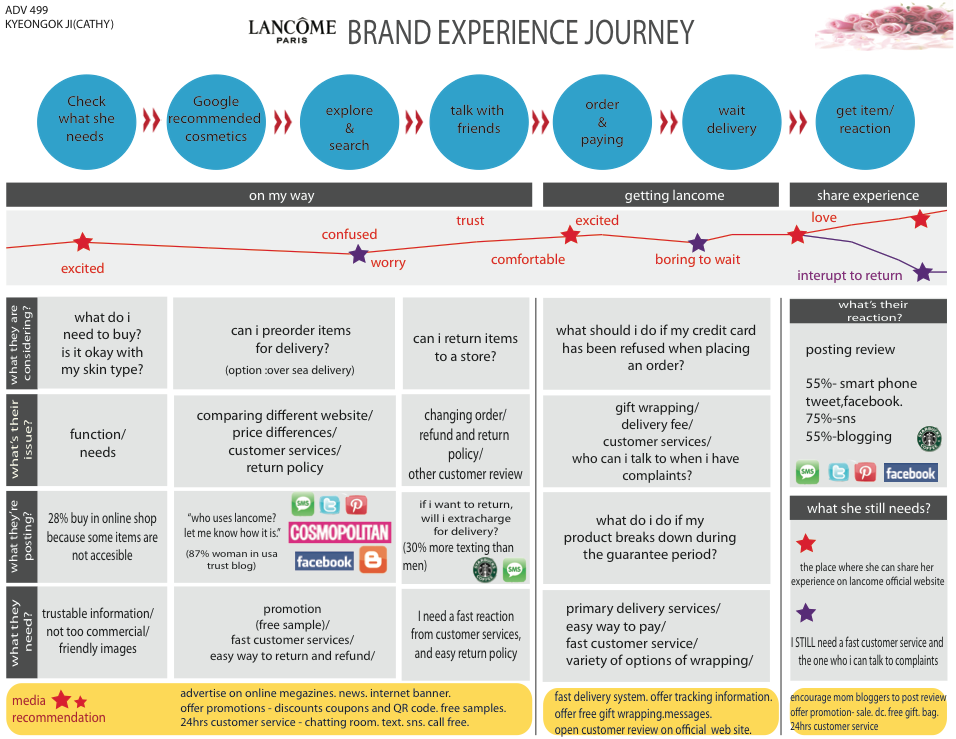
lacome customer journey map example
Image source

2. Align your answers with the customer journey stage.

You have the customer questions in hand—now you need answers. Craft responses with the customer journey stage in mind. If your customers’ main question at the problem-aware stage is “Should I stay in an Airbnb or a boutique hotel in Hawaii?” they may not be ready for you to tell them all about your breakfast options. Be strategic with your answers and gently lead them to the next step.

3. Who can answer these questions best?

Once you’ve determined the answers, figure out how they’ll get that information. Adding answers to your website, social media posts, and emails are all great places to start—but don’t stop there. Be proactive with outbound text messages, entries in your self-service knowledge base, or chatbot scripts.

4. Implement and iterate!

Your next step is to put your plan into action and see how it works. Mapping your customer journey is important, but it won’t give you all the answers. Only through testing and analyzing your results can you ensure a smooth customer journey from start to finish.

Engage customers with messaging.

Mapping your customer journey is an essential part of ensuring a seamless brand experience. You can gently nudge customers from stage to stage with the help of well-timed, proactive messaging.

Frequently Asked Questions (FAQs)

What is a customer journey map and why does it matter?

A customer journey map is a visual representation of every step a customer takes when engaging with your brand. It helps teams identify friction points, understand emotions and motivations, and create messaging that meets customers where they are – whether they’re researching, purchasing, or seeking support.

How does messaging fit into the customer journey?

Messaging connects the dots across each stage of the journey. From awareness to advocacy, consistent and personalized messages help build trust, answer questions faster, and keep customers engaged.

How can mapping improve customer experience?

Mapping uncovers gaps, redundancies, and missed opportunities in your communication strategy. By understanding where customers get stuck or drop off, businesses can refine messaging, improve channel timing, and streamline support to deliver a seamless experience.

How often should you update your customer journey map?

At least twice a year or whenever major changes occur in your products, channels, or customer expectations. Frequent updates help ensure your messaging stays aligned with evolving behaviors and technologies.

What’s the best way to start building a customer journey map?

Start by gathering data from your CRM, support logs, surveys, and analytics. Identify your key personas, map their typical paths, and highlight the moments where messaging can make the biggest impact – such as onboarding, checkout, or re-engagement.

How can businesses measure messaging success across the journey?

Track engagement metrics like open rates, response times, CSAT scores, and conversions at each stage. The goal is to understand not just if customers are responding, but how messaging drives satisfaction and long-term loyalty.

How to Deal with Angry Customers

The worst part of customer service?

Dealing with angry customers.

It’s hands-down the most stressful, uncomfortable part of the job. But it can also make the biggest difference to your business—when you do it right.

Continue reading to see how to handle angry customers.

Why respond to angry customers’ messages at all?

Many of us were taught to turn the other cheek as children. Ignore the kid throwing a fit (it’s about them, not you). And while that is sage advice for many situations, it’s not the best way to handle your angry customers.

Even a casual, “This product sucks!” or “Worst service ever!” deserves a response. It’s easy to delete the comment or ignore the message, but addressing it has some benefits.

Customers are actually pretty forgiving of companies they already frequent. Zendesk’s CX Trends Report says that 74% of customers will forgive a company for its mistake if they receive excellent customer service.

Plus, 81% of customers are more likely to make another purchase after a positive customer service experience, while 76% of customers will switch to a competitor after several bad experiences.

In one study published in the Harvard Business Review, customers who received responses on Twitter from airline and wireless customer service teams saw Net Promoter Score® increases of 37 and 59 points, respectively—a big jump considering NPS® only has a range from -100 to 100.

For airlines, you can see the difference in dollars. When customers complain, how quickly an agent responds correlates with how much more the customer is willing to pay in the future.

  • Under 5 minutes: $19.83 more
  • 6–20 minutes: $8.53 more
  • 21–59 minutes: $3.19 more
  • 60 minutes or more: $2.33

Note that any response at all turns the situation around and helps improve customer perception.

Contact Us

How to deal with angry customers.

When angry customers reach your customer service agents, there’s usually a legitimate issue. Take a look at some of the ways you can turn angry customers into happy ones.

Be proactive about known problems.

It happens. A service falls between the cracks, products get damaged, and shipments get delayed. It’s all about how you handle it.

Customers don’t want to feel like you’re trying to get one over on them. They’ll feel cheated, and you’ll lose their trust. Instead, get ahead of problems by communicating with customers as soon as your team notices an issue. Use outbound text messaging to ensure your message is received (and that it doesn’t end up in the junk mail folder).

When things go drastically wrong, send a message that hits these 5 points:

  1. State the issue.
  2. Apologize.
  3. Offer a solution/discount.
  4. Assure them it won’t happen again (if it’s in your control).
  5. Thank them for their continued support.

Lean into conversational support tools.

A positive (but sometimes negative) benefit of messaging is that you’re always easily accessible to the customer. So it’s not unusual to see more complaints through messaging than you might see through traditional phone and email communication methods.

Yet messaging is a great channel to work with angry customers, especially when you have the right tools in place to help you.

While customers might be more likely to offer negative or inappropriate comments through messaging, it also gives your service agents a chance to respond calmly and succinctly. (Something that isn’t so easy to do when someone is yelling at you on the other end of a phone call.)

As we mentioned earlier in the HBR study, responding quickly to angry messages goes a long way. How do you know which customers to prioritize? Look for conversational AI platforms that use sentiment analysis to help you prioritize tickets. Bump angry or unhappy customers to the top of the list to ensure a fast response time.

Diffuse the situation with empathy.

When customers send upset or angry messages, it’s still easy to get flustered or respond with short, superficial answers. Follow these 5 steps to diffuse the situation.

  1. Remain calm: We know—it’s easier said than done. But if you respond aggressively or defensively, it’ll only make things worse. Remember that the customer is angry at the company, not at you. If you’re having trouble keeping your cool, bring in a manager sooner than later (that’s what they’re there for).
  2. Show empathy and validate their concerns: Use phrases like “I understand” and repeat back their problems to show you’re paying attention. Feeling like they aren’t being heard is often a customer’s top complaint, so show that you’re listening.
  3. Don’t argue: We know it’s tempting, but don’t fall into a debate on the state of the world. Instead of trying to disprove every point, they’re making, stick to the facts and what you can do to solve the problem. If the customer keeps pushing, simply repeat what you can do for them and how you can make it right.
  4. Apologize: As long as your company policy allows it (and it should), apologize for the problem and accept responsibility. This will ensure the customer feels heard and knows you’re not just trying to push the issue under the rug.
  5. Offer a solution: Once you’ve figured out the problem, try to find a solution that works within the bounds of your capabilities and satisfies the customer. Sometimes that’s a full refund. Sometimes it’s just a discount on their next purchase. Identify the severity of the problem and respond accordingly.

Be kind to the customer and yourself.

Remember, a human being is behind that angry message, with their own lives, worries, and stressors. While the mistake or issue they’re coming to you with may have been the spark, their anger is fueled by other things going on in their lives. The best thing you can do for them is to remain positive (or, at the very least, neutral) and find a solution to their immediate problem.

But it’s also important to give yourself (and your team) some grace. Customer service agents face a lot of pressure on all sides, and sometimes that mean-spirited message can be the breaking point. If agents are feeling overwhelmed, do these 3 things:

  1. Bring in a manager: If you’re overwhelmed, or the customer is using threatening and inappropriate language, notify a manager immediately. They can help you de-escalate the situation or decide to terminate the relationship if the customer has crossed a line.
  2. Take a break: If possible, step away from your computer after a challenging situation. Stand up, stretch, take a quick walk, or have a bite to eat. Do what you can to shake off the conversation. (Sometimes, literally shaking your hands and limbs helps!)
  3. Disconnect: Make sure to use your vacation time to disconnect from your computer and truly relax. You’ll be better off for it.

Offense is the best defense.

You’ve heard that phrase, right? It means that if you get ahead and stay ahead, you won’t have to defend as often.

If you’re constantly getting bad customer feedback, there’s probably a disconnect between what you think the customers want and what they actually want.

Instead of going off assumptions, collect information from your customers.

  1. Figure out what type of feedback you want to collect: There are different kinds of information you can gather from your customers. Think product reviews, customer satisfaction surveys, and NPS surveys, to name a few. They all have their place but start with the ones that will have the biggest impact on your current customer concerns.
  2. Roll feedback requests into your existing processes: Send product survey requests shortly after customers receive the product, or ask customers to fill out satisfaction surveys at the end of customer service interactions. Use the processes you already have so you don’t add too much work to your already overwhelmed team.
  3. Measure, evaluate, adjust, and repeat: Metrics work best when you look at your numbers over time. Continue to collect customer feedback and improve your products, services, and processes.

Rebuild customer trust.

When customer trust is so hard to earn, you want to do whatever it takes to keep from losing it. Turning an angry customer into a loyal one isn’t as much of a lost cause as you might think.

Regain customer trust by:

  1. Admitting fault: Yes, we mentioned this earlier, but it’s a big sticking point for many customers. Admitting that someone somewhere actually made a mistake is the first step toward repairing the relationship.
  2. Use sincere, positive language: If you’re unsure how to solve something, use phrases like, “Let me find out for you” or “Let’s figure this out together.” The customer is more likely to exhibit patience, and you won’t add any fuel to the fire with negative language.
  3. Follow up when you say you’re going to: If you can’t solve the issue immediately, schedule a time to follow up with the customer—and don’t forget. Even if you haven’t been able to solve the problem yet, reach out to keep them informed. Doing what you say you’re going to do will help build trust, but it’ll backfire if you forget.

Move forward.

We all have to deal with angry customers, but it’s about how you repair the relationship and move forward. These steps are just a starting point. They’ll help rebuild the bridge between your company and your customer.

Is Live Chat Right For Your Website? Use These Questions to Find Out…

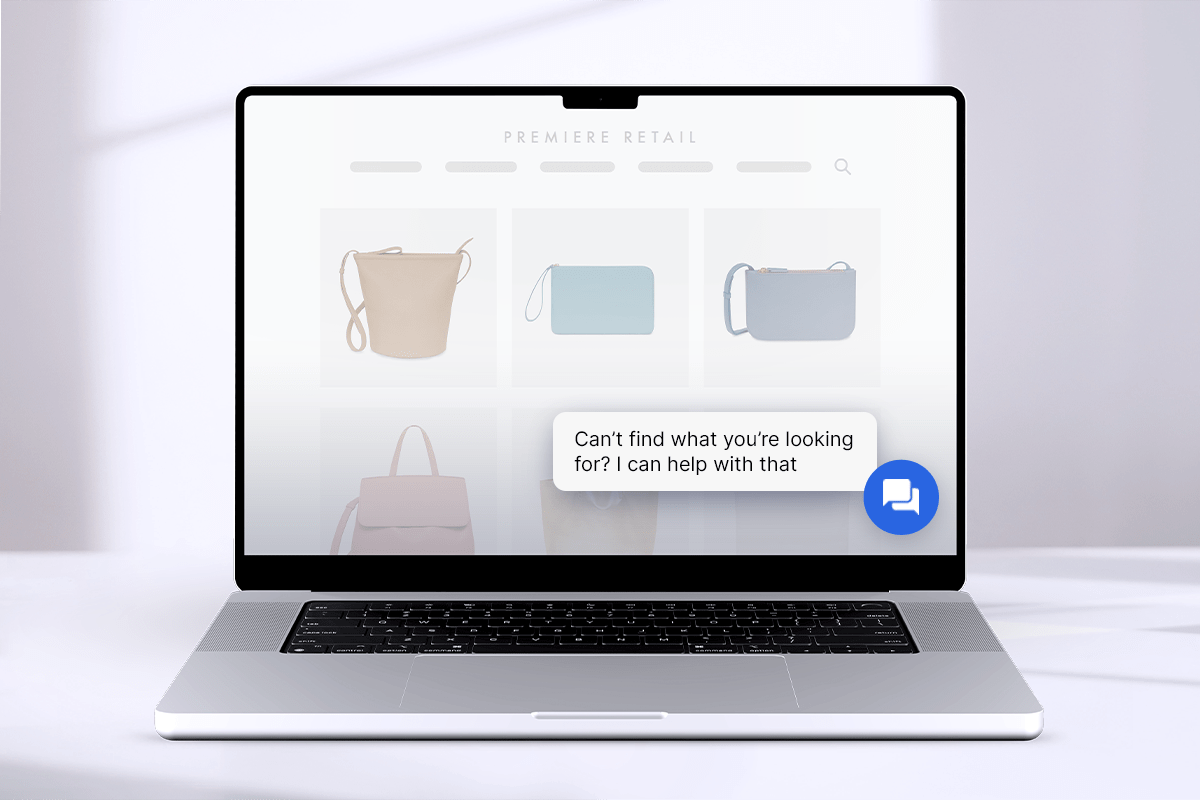
It began with corporate businesses. Small chat boxes started appearing in the lower right corner of their websites with friendly phrases like “Welcome!” and “What can we do to help?”

Implementing live chat used to be costly and time-consuming—something only large organizations had the capacity to handle. Now, it’s much more accessible to businesses of all sizes.

As more and more businesses adopt live chat (also known as web chat), it’s become an integral part of customer communication strategies, and customers expect easy one-to-one service from nearly every business they interact with.

In 2020, 42% of US online adults said that it was important for retailers to offer live online chat on their websites, up from 27% in 2019, according to Forrester Research. And that number is only growing.

But if you’re asking yourself, “Is live chat right for my website,” we’ve put together some questions to help you decide.

Which platforms do my customers prefer?

Let’s start with determining if live chat is the best way to reach your customers.

Live chat is a great opportunity for fast, efficient one-to-one communication, but it may not be right for everyone. Ask yourself these questions to help identify if live chat is the way to go.

How old are my customers?

Live chat users typically fall along generational lines. In 2020, 20% of surveyed Millennials and Gen Zers used web chat for the first time, according to Zendesk. At the same time, 14% of Gen Xers and only 10% of Baby Boomers/Silents did.

While live chat has the potential to serve customers of all generations, yours might be more comfortable with traditional methods like voice and email.

How tech-savvy are my customers?

Do your customers need help finding your website? Determine if choosing live chat make sense for the amount of traffic you have, and how your customers typically connect with your business.

Do our competitors offer live chat?

Why is live chat necessary for your business? Because your customers expect it. Especially if you’re competitors have beat you to the punch.

Live chat can be a competitive advantage for your business—which means it can be a disadvantage if your competitors have it when you don’t. Take a look at the competition to their live chat experience, and determine if not having it is hurting your business.

If your competitors haven’t jumped on the live chat train, consider what it would mean to be an early adopter.

Which customer touchpoints will benefit from live chat?

Before you throw a chatbox up on your website, consider how you can use it to strategically serve your customers. There are three distinct points in the customer journey where live chat can make a difference.

What kind of support will we offer prospects?

We’d say this is probably the most frequently thought of use case for live chat. It’s your standard pop-up that welcomes you to a website and asks if you have any questions upfront.

For prospects, you’re serving them in the early stages of their engagement (answering basic FAQs, helping them navigate the website, etc.). However, there’s also ample opportunity to influence purchasing decisions. Think about how you typically engage with prospects early on and how that can translate into live chat.

What kind of support will we offer during purchase?

Immediately before and during purchases is where live chat has the most direct impact on revenue. Being available for quick questions on the product page, pricing page, and even at checkout can help a buyer make the decision to buy.

Plus, customers recognize the value. According to Forrester, 44% of online consumers say that having questions answered by a live agent while in the middle of an online purchase is one of the most important features a website can offer.

What kind of support will we offer post-purchase?

Post-purchase customer service is often rife with simple, repetitive questions (like “Where’s my order” and “What’s the return policy?”) that can bog down your call center. Using live chat to answer these questions quickly and efficiently—or even with a chatbot—improves customer satisfaction while relieving the pressure on your call center agents.

What types of questions do customers ask the most?

You probably have a good idea of the questions you field from customers the most. Some questions and information are easily handled by customer service agents using live chat, while others may need another method of communication. Here are two questions to think about.

Are customer questions simple or complex?

Live chat is great for answering simple questions, but it can be tough to work out more complex problems over messaging. Take a look at how long it takes for your customer service agents to resolve issues and your first-rate resolution numbers. Live chat isn’t the best choice if it takes a long time to solve customer questions and often requires multiple interactions.

However, simple questions, troubleshooting, and problems that can be solved on the first contact are great opportunities for live chat to shine.

Do they contain sensitive information?

While live chat platforms are often equipped with superior security features, some customers may be more reluctant to share sensitive information over messaging. If that’s the case, find other ways live chat can serve your customers.

How will we staff live chat?

Staffing live chat isn’t like staffing your call center. While it’s possible to operate your live chat during business hours, many online customers expect 24/7 service. But there are ways to serve customers off hours without stretching your team too thin.

Ask these additional questions:

Can we hire staff dedicated to live chat support?

Before you implement live chat, determine if you’ll be hiring staff specifically for live chat or if you’ll be reallocating call center agents to work it. While there are many transferable skills, asking agents to do both calls and messaging can be overwhelming without the right training.

Will we offer 24/7 support?

One of the benefits of online shopping is 24/7 availability. Customers aren’t limited to traditional shopping hours. But this also means they’ll need support throughout all hours of the day. Unless you have a high volume of customer questions, it’s unlikely you’ll need to staff live chat around the clock. But you can do things like staggered shifts and AI support to help customers across a wider range of hours.

At the very least, program your live chat platform to offer an away message with the expected response time and other resources that might help.

Will we use chatbots?

Chatbots are a great way to serve customers at all hours of the day (they never sleep). But they can also answer simple questions, collect information, disperse surveys, and more. Determine early if you plan on using chatbots to support your live chat efforts.

What training will we provide staff for live chat?

If live chat is your first foray into business messaging—besides email—then it’s important to train your customer service agents accordingly. It’s not as simple as translating phone skills to messaging. You’ll need to provide your customer service agents with guidelines specific to live chat.

For example:

  • How do you greet customers?
  • Are emojis acceptable?
  • What kind of language is appropriate? (e.g., can you use casual language like “Hey” or “What’s up?” or is it more formal?)
  • Can agents use shorthand terms like BRB, TTYL, etc?
  • How will you solve conflicts over messaging?

Where should we implement live chat?

You absolutely can put live chat on every page, but should you? Too many popups can easily anger your customers. So while having a welcome message on your home page may seem like a solid strategy, take some time to figure out if it’s right for you. If you already have a privacy popup, newsletter signup, and maybe a special sale drop-down, it’s probably best to skip the live chat welcome message.

There are other pages you definitely shouldn’t ignore, like your:

  • Contact page
  • Service or sales pages
  • Shopping cart or pricing page

Take a look at your website traffic to see which pages make the most sense. Start with the basics, and work your way through pages with high bounce rates, lower conversions, etc.

How will you measure success?

Don’t go in blind. Take a look at your live chat goals and collect live chat metrics to ensure you’re meeting those goals.

Is customer service your top priority? Make sure you measure:

  • Response times
  • Average resolution time
  • Customer satisfaction

Are you looking to lower your call volume and improve efficiency? Don’t forget to track:

  • Ticket volume
  • Conversations per agent
  • Containment rate

Find the right mix of metrics to measure your goals and help you improve live chat as you and your team become more familiar with the medium.

Bonus: Questions to ask live chat software providers

If you’re ready to implement live chat, you’ll need to find a conversational platform to support it. Selecting the right platform for your business can be tough—there are millions of features to choose from, and it can quickly be overwhelming.

  • Start with these basic questions:
  • What live chat features do you offer?
  • Can I customize the chatbot solution?
  • What integrations are available?
  • What analytics can I track?
  • What’s your uptime?
  • How much does it cost?

Live chat is right for your business.

If you provide any kind of online sales (and even if you don’t), live chat is an asset to your business. You’ll be able to engage with your customers at key points in the customer journey and offer the support they’ve come to expect.

Take the time to answer these questions thoroughly, and you’ll be ready to take the next step.