• Don't miss our webinar: Take Your Omnichannel CX to New Heights: How Spirit Airlines Is Upgrading Self-Service with Agentic AI  Watch now -->

Pella Resolves Pane Points with Messaging

Pella Corporation is a leading designer and manufacturer of window and doors.  Pella has over 7,000 team members, 17 manufacturing locations, and more than 200 showrooms across the country. Pella supports every step of the customer’s journey, from design to installation, and support after the sale. Pella’s unique advantage is that they distribute where their customers want to buy, through exclusive Pella distributors and custom builders, to big box retailers like Lowe’s.

Pella is committed to exceeding customer expectations, and that includes customer support. Pella recognized that strong sales growth directly impacted the need to scale their contact center. The company turned to Quiq’s Messaging platform to achieve efficiencies such as a 98% faster resolution time with messaging vs. email.

Pella Rolls Out Customer Support Messaging

Pella's shift to customer service messagingPella partnered with Quiq to implement messaging and went live with the platform in January of 2020 within the corporate contact center. The plan was to start with a subset of their customers and agents, build something and then learn from it.

The first Rollouts included:

  1. Messaging support for Pella’s National Account Sales Reps, who service some of Pella’s largest B2B customers like Lowe’s.
  2. The company chose four phone agents to go live with the messaging channel.
  3. The agents were provided with 2 hours of hands-on training and then allowed to spend time practicing with the system.
  4. Pella sent out a communication to their sales reps to promote the channel explaining how the new messaging channel worked and when it would be available.
  5. Regional Managers were invited to a virtual meeting to unveil the new channel and were excited about this new support channel.

The Pella team was impressed with how smoothly the launch was executed and chose to expand the launch to include an Order Status chat bot that would handle any requests for Order status. This bot supports the sales reps and B2B customers as well.

  • Pella designed the order status bot, which includes an integration with Pella’s order system
  • The bot is also able to seamlessly hand off any conversation that goes beyond order status or requires further research to a group of contact center agents.
  • With the help of the Quiq team, Pella was able to deploy the new bot quickly and effectively.

Flattening the Contact Center Growth Curve

Adoption began almost immediately. Volume quickly ramped up as many of the sales reps became early and eager advocates for messaging, sharing their experience with colleagues. Both agents and reps love the ability to share screen shots, gifs, and links within their conversations to quickly exchange information. Today, the entire National Account Support team takes conversations from sales reps. Agents typically handle up to 3 simultaneous messages at a time with the average conversation lasting 5 minutes.

Prior to the implementation of messaging, the contact center received thousands of phone calls and emails from sales reps. Since implementing SMS, at least 15% of phone calls have been deflected to the messaging channel.

Messaging helps sales reps get the information they need faster, making in-home meetings with customers more efficient. Now resolving something over text takes an average time of 8 mins on SMS vs. emails that could sit in a reps inbox, and were averaging over 7hrs, for resolution. The 98% faster response time is paying off.

In one example, a customer wanted to know if they could have windows that matched their existing trim while meeting with a Pella sales rep in their home. The rep was able to snap a picture of the trim and text the question and photo to an agent. Within 20 seconds the agent sent a picture of three trim options that would work. Because the customer immediately received the information they needed, the sales rep was able to close the sale that day.

“Agents prefer messaging over talking on the phone. Over the phone, if there are 10 seconds of silence while you’re looking up something in the system, it feels like an eternity. When you’re texting, the communication is asynchronous, so the messaging agents feel less stressed and hurried, yet they’re faster than the phone agents.”

~ Traci Scott, Pella

Pella’s Order Status Bot

With a successful implementation of SMS under their belt, the Pella team decided to automate some of their conversations with the help of a Quiq bot. The company rolled out an order status bot in May of 2019, integrating it with their order system.

The integration of Pella’s messaging bot with the company’s order system enables B2B customers and sales reps to simply type in the order number to receive an instant, real-time status of the order. Since launching the bot in May, customers have been able to quickly receive status updates without the need to speak to an agent. When a human agent needs to intervene, it is easy for the conversation to get transferred to one of the two agents who support order status inquiries.

What’s Next at Pella For Customer Messaging

Although COVID-19 changed the order of Pella’s project roadmap and drastically shortened the implementation time, messaging remains a priority for several use cases throughout the customer’s experience. The results achieved from messaging and chatbots for the National Account Sales Reps has Pella anxious to get started on the next project.

Pella sees no shortage of opportunities to help their B2B and B2C customers with messaging. Pella also sees the potential for a bot to do outbound appointment reminders.

Messaging has helped the company craft a digital customer experience that is faster and more convenient for customers and more efficient for the company. A clear win for everyone.

About Quiq

Quiq is ready to help your company gain efficiencies within your contact center. Schedule a call or contact us to discuss how Quiq’s messaging platform and bots can work throughout your organization to streamline workflows, reduce costs, and increase customer satisfaction.

How Chatbots for Customer Experience Deliver Results

Chatbots deliver results across a variety of industries. From retail to travel, chatbots are there to help improve the customer experience, acting as the always-on, always-ready assistants your customers want.

Consumers are interacting with chatbots for customer experience more often, even if they don’t know they are engaging with a chatbot. Read our infographic below to discover why 80% of businesses will utilize some form of chatbot automation by 2020.

Chatbots deliver results for customer experience and beyond

What Are AI-Powered Chatbots?

AI chatbots are automated systems designed to hold simple conversations with consumers and leads. They’re often used for live chat on websites, ready to help answer questions for shoppers who are browsing.

Chatbots are programmable, meaning that online retailers can rely on them to address questions on specific topics when no representatives are available. They can respond directly to certain keywords and questions, and their speed is ideal for consumers who may be in a hurry to receive an answer before they decide to buy a product. While bots are often less useful for complex or customer-specific queries, they can generate valuable resources and responses to more basic questions within seconds.

Today, chatbots are commonly used to help retailers save time and provide immediate answers to consumers. They can appear as pop-ups on websites, in SMS messages, and more. Thanks to their speed and convenience, they play a major part in enhancing the overall customer experience.

Who Uses AI Chatbots?

Artificial intelligence chat options can benefit a wide range of industries, from retailers to banks to dating websites. Retailers and financial institutions use chatbots as a way to communicate with leads and existing customers without requiring a live representative for every interaction.

One minute can make the difference between a successful transaction and a lost lead. Chatbots are useful for product and service providers who want to increase the likelihood that shoppers will buy. A bot can simulate human conversation, increasing trust between the consumer and retailer in a cost-effective way. This solution can integrate smoothly with any website management strategy, convincing customers to stay on the website longer.

Chatbots have become more mainstream in customer service as retailers start to rely more on mobile solutions and personalized messages. Phone calls and emails can be a hassle, and the wait times can drive away leads. Chatbots eliminate these wait times while making life easier for both agents and consumers.

Why Use Chatbots to Deliver Results?

Chatbots offer an easy, personal way to interact with shoppers. They’re less tedious than using real-life agents for basic questions, and they reduce the time it takes to handle customer demands. Quiq chatbots deliver a variety of results at once and provide many other benefits for retail and financial websites.

1. Chatbots Help Engage Customers

  • From the moment someone visits your site, logs onto your app, or connects with your social media page, a chatbot can be there to start the conversation.
  • 57% of consumers are interested in getting real-time answers from bots on a company website1.
  • Chatbots can guide customers where they need to go, based on feedback, browsing history, and other personalized variables. Bots continually learn from interactions and use the information to get better at helping agents and consumers.
  • Available 24/7 and across a variety of platforms, consumers can connect with your brand whenever they want, using the messaging channels they already know and use.

2. Chatbots Improve Customer Service

  • 95% of consumers believe customer service is going to be the major beneficiary of chatbots2.
  • Chatbots can open support tickets, answer questions, collect feedback, and point customers toward helpful resources quickly and efficiently.
  • Bots are only as good as their programming but good bot interactions escalate to human agents if they get stuck in conversations.
  • Chatbots can route customers to the right customer service agent, while providing the agent with useful customer information.
  • Chatbots are predicted to handle 85% of customer service interactions by 20203.
  • Setting up a chatbot platform is a cost-effective way to relieve human agents of simple, repetitive tasks, and increase efficiency.
  • Chatbot automation could save businesses an estimated $8 billion a year5.

3. Chatbots Increase Conversions

  • Chatbots can monitor conversations in real-time and analyze the available data to suggest products to human agents. 47% of customers would buy items suggested from a chatbot4.
  • Set rules for your chatbot to recognize keywords such as “buy” or “purchaase” to prioritize customers who may need help with a transaction.
  • Chatbots can present dates and times for customers to schedule appointments and reservations that customers can book with a tap of a button.

How Chatbots Can Be Used in Your Business

If an industry leader is looking to reduce agent workload or find ways to increase sales, customer experience chatbots could make a massive difference. AI-powered bots help retailers in all sectors stay competitive by saving time and providing valuable information that consumers can count on.

Automated systems generate responses faster than a human behind a computer or phone screen, and they can serve multiple customers at a time. It’s easy to program chatbots to answer certain types of questions and provide answers on a variety of topics. You can also use them to prioritize shoppers in need and reserve more complex issues for real-life experts. Quiq platforms allow businesses to integrate both chatbots and personalized messaging for the optimal customer experience.

Quiq: Your Messaging and Bot Solution

Customers are knocking. Are you going to answer? Quiq has the leading asynchronous platform to enable customers to connect with companies across today’s most popular business messaging channels. You know them. SMS/Text Messaging, Web Chat, Apple Business Chat, Google Rich Business Messaging, Facebook Messenger, and Twitter Direct Message, to name a few.

Let Quiq help you incorporate native and third-party bots into any part of the customer conversation to streamline your workflow and deliver results. Contact Quiq for a demo today by visiting www.quiqstaging.wpengine.com.

Customer Service Tips: Facebook Messenger for Business

We can all agree that the advent of social media forever changed how consumers engage with companies. Over a relatively short time, consumers gained access to public platforms on which to voice their thoughts and opinions. With this newfound megaphone, consumers’ opinions, once constrained to their close friends and family, can now reach the eyes and ears of the world. In the best of cases, consumers promote and propel a new company or service to success, and in the worst, consumers damage a brand’s reputation for years.

The discussion about whether or not to offer customer support over social media has been debated inside the walls of every organization. Social media as a customer support channel has become fairly standard. Major brands aren’t just adopting social customer service; they’re making it a priority. Did you know that 67% of companies believe social customer service is the most pressing short-term priority for the contact center (Forrester)? This is largely due to the fact that over two-thirds of customers who contact a company on social media, do so for customer service (J.D. Power).

[/fusion_text][fusion_text columns=”” column_min_width=”” column_spacing=”” rule_style=”default” rule_size=”” rule_color=”” content_alignment_medium=”” content_alignment_small=”” content_alignment=”” hide_on_mobile=”small-visibility,medium-visibility,large-visibility” sticky_display=”normal,sticky” class=”” id=”” margin_top=”” margin_right=”” margin_bottom=”” margin_left=”” font_size=”” fusion_font_family_text_font=”” fusion_font_variant_text_font=”” line_height=”” letter_spacing=”” text_color=”” animation_type=”” animation_direction=”left” animation_speed=”0.3″ animation_offset=””]

The Benefits of Using Facebook Messenger

Facebook marketers can take advantage of a wide range of opportunities when they use Messenger to facilitate communication with consumers. Social media marketing with Messenger offers several benefits.

  • Improve Customer Accessibility: Statistics indicate that about 2.7 billion people use Facebook regularly. This creates a fantastic opportunity to use messenger chatbots and agents for brand-building and customer support. As long as someone has a Facebook account, they can easily reach service representatives at any time.
  • Build Trust With Customers: Consumers like having the option to contact businesses through messaging platforms. If a support representative is willing to engage in honest conversations and listen to customer needs, those customers will be more likely to trust the brand in the future.
  • Answer Questions Quickly: While phone and email communication can be slow and tedious, instant messaging can help consumers receive the answers they need much faster. Messenger bots can provide answers to simple inquiries within seconds, which helps save both time and money over the long term.
  • Increase Purchase Intent: In some cases, the only thing stopping a consumer from making a purchase is a lack of information. If they can find that information easily, they’re often more likely to buy. Facebook IQ marketing solutions help businesses connect with shoppers on a more personal level. While it’s easy to get a consumer’s attention, keeping their attention takes a little more time and effort from customer support.

Tips for Using Facebook Messenger for Business

With Facebook’s continued investment in Messenger, which allows customers to engage with companies via private messages, the question is no longer about whether customer service should be offered on social platforms like Facebook, but how to offer this type of social support most successfully. While some companies are cautious when it comes to using Facebook Messenger for business, consumers are actively seeking help on this channel.

Consumers want to message companies how and whenever they want, and companies must figure out how to best handle this latest consumer expectation. How should a company prepare to launch Facebook Messenger as a customer support channel? Here are eight tips to consider:

1. Be Responsive

The first thing to prepare for is the customer’s expectation for a quick response.

To give you an idea of what to shoot for, let’s dive into a business Facebook Page. Have you ever seen the Very responsive to messages badge? This badge shows which Pages respond quickly and consistently to private messages. To get the badge, a page must have both a response rate of 90% and a response time of 15 minutes or less, consistently over seven days. Even if this badge isn’t a goal for your business, it does provide insight into what “responsive” means in 2017.

Also, know that customers want 24/7 support—issues don’t stop happening on nights and weekends. A study from Convince & Convert found that among those respondents who have attempted to contact a brand, product, or company through social media for customer support, 57% expect the same response time at night and on weekends as during normal business hours.

That’s a tall order! But adding messaging actually makes your customer support team more efficient.  Not only that, you will see a shift from inbound phone calls to messaging, a significantly less expensive channel. Be sure to respond quickly to your customers over messaging, just as you do with your other channels.

2. Understand Customers Control the Cadence

There are many reasons a customer may engage a business via Messenger:

  • tracking a shipping date,
  • having trouble logging in,
  • checking the status of a return,
  • pre-purchase questions, or
  • trying to resolve an issue.

Helping customers on their preferred channel, in their preferred time frame, can give customer support CSAT scores a boost. But to communicate on Messenger effectively, businesses need to understand the difference in cadence with this channel.

With all other channels (phone, email, web chat) the company is able to control some or most of the interaction speed. Using Messenger for business, and messaging in general, is different. Customers control the pace of the conversation, not the company. Because customers will message a business just like they do a friend, they will expect companies to respond similarly. If the customer is active and highly engaged, messaging quickly, they will expect your agents to follow suit.  However, if they constantly shift gears and thus the pace of the interaction because life gets in the way, they will expect you to adjust as well.

Customers should have no question about how to contact Facebook Messenger support for your business—sending the first message should be all it takes to get the ball rolling. Make sure to enlist a solution that helps agents easily and efficiently manage the flow and cadence of conversations. Look for a multi-conversational interface that proactively prompts agents on how to effectively handle multiple messaging conversations simultaneously, all at the pace of each customer

3. Offer More Than Facebook Messenger Support

In addition to being a great customer service solution, Messenger can also be a powerful pre-sales resource. A potential customer perusing your Facebook page, may not want to ask a question on your wall because it is such a public forum. Messenger is an avenue for potential customers to ask questions privately while they’re considering making a purchase. Giving customers a high-touch and responsive experience can provide them just what they need to pull the trigger on a purchase.

Make sure agents are ready to answer questions, provide suggestions, and guide customers through their purchase experience without being too pushy. Customers will be turned off if they feel they’re being pressured, but appreciate thoughtful suggestions to help them along their purchase decision path. Providing an effective Facebook Messenger support system is a great way to provide users with the support they’re looking for via their preferred communication channels.

4. Choose the Right Agents

Just as Facebook Messenger is frictionless for the customer to use, because your agents are also customers, they too are already comfortable with the channel.

It takes someone thoughtful in their communications to handle the art of responding on behalf of your organization over social media. Most companies have a healthy fear of social media channels such as Facebook, and although more private, this is still something to consider when using Messenger as a support channel. Make sure agents are well-versed in social support and receive coaching before setting them loose.

That said, a messaging solution can also be a fantastic training solution, if the technology allows behind the scenes coaching and collaboration. Managers can watch a conversation unfold or be available to help an agent in the background, without the customer knowing. And, with the correct system in place, an agent can transfer the conversation to their coach, or a manager can easily jump in take over a conversation if needed.

When the right agents, with good social media judgment, are in place, you can give them the power to get it all right with technology.

Those that contact Facebook Messenger support for your business should have a seamless experience, from initial contact to conclusion. When the right agents—and good social media judgment—are in place, Messenger can be an effective way to improve customer outreach and support.

5. Take Advantage of Multimedia

As the saying goes, “A picture is worth a thousand words”, so goes customer support! Facebook Messenger is a rich, multimedia-capable channel that includes emojis, images, videos, and stickers. Customers send their friends and family photos to help explain things more easily, so give them the opportunity to interact with customer support in the same way.

Agents should feel prepared and comfortable to send and receive images and videos to help them get to the bottom of an issue.  The ability to use images and emojis, coupled with text shortcuts or snippets, can shorten the interaction time, solving the issue faster and at a higher satisfaction level. Set agents up with a stockpile of relevant media, or give them the ability to snap photos and video on the fly to handle common issues.

Also, don’t overlook the personalized touch of using emojis! Tactfully using emojis or stickers in messages is an easy way to infuse personality and emotion into support interactions.

6. Manage Expectations

Diving headfirst into a new Facebook Messenger marketing strategy can be a major risk, especially when a retailer implements new technology. Setting realistic goals is an essential part of the process to ensure customer service agents can stay up to date and collect valuable feedback. Without proper expectation management, retailers are likely to overextend their budgets and resources, which can lead to losses.

Messenger communication requires marketers to develop a plan, a proper ad campaign, and a unique voice. There are many factors to consider, such as automated solutions and Facebook Messenger’s range of features, which can all have an effect on overall performance and success.

Facebook Messenger marketers may set up automated messages for common questions that shoppers ask. They may want to create a detailed management plan for their messages and customer interactions. These can be achieved over time with the proper tactics and resources in place.

It’s important for retailers to establish realistic expectations for Facebook marketing strategies and set accommodating goals. By creating small goals and reaching for them one at a time, industry leaders can transition to new strategies without running into as many delays.

7. Establish a Protocol for Messages

The debate of which department should own social media has occurred since Facebook’s inception. By now your company likely has a process for addressing inbound support inquiries, product comments, customer posts, and outbound social engagement on your Facebook page, and whether it’s the role of customer service or marketing to jump in depending on the situation.

Many, if not most, inbound messages you receive in Messenger will be support or pre-sale inquiries. Make sure to work closely with marketing to establish a protocol that ensures timely, knowledgeable responses by the right people. Or opt to have customer support own the Messenger platform all together!

8. Launch This New Channel

After Messenger is enabled, make sure customers can find you. Of course, your customers will be able to send you a message by clicking the “Send Message” button that’s now on your page. But it’s important to also make sure your business page username (indicated with the @ symbol before it), is also set. This will help customers find your business on both Facebook and the stand-alone Messenger app.


Another option is to use Messenger Links, which use a Page’s username with the URL (m.me/username) that, when clicked, opens a direct conversation with your business in Messenger. Simply add your username to the end of the m.me/ to create your Link.

Ever wondered what those crazy blue circles were that you keep seeing in Messenger? These are Messenger Codes, which work similarly to Messenger Links, but users scan the code using a phone camera to open a new message.

Take Advantage of Facebook Messaging

In a world of Facebook posts, instant messages, and chatbots, embracing the latest technology is the best way to build retail or eCommerce success. Millions of people send messages and scroll through Facebook every day using their mobile phones. This opens up the opportunity to reach consumers at any time from almost any location.

Quiq offers messaging software and automated solutions that retailers use to enhance customer service and social media strategies. For more information about Messenger chatbots or live messaging options, contact Quiq and request a demo today.

Best Practices for Implementing Messaging for Customer Service

It has been established that messaging is the highest rated contact method for customer satisfaction compared to all other communication channels. (eWeek).  However, like other service channels, messaging comes with a unique set of considerations when implementing it into your customer service centers.  This is why it is important to do a little prep work to help ensure successful adoption.  Three things to consider for a smooth implementation:

  1. Business Metrics and Goals
  2. Staffing and Training  
  3. Customer Adoption

Business Messaging Best Practices

Since most consumers communicate via phone and text, industry leaders are finding new ways to adapt by using high-quality messaging apps and software. Business messaging for customer service is a quick and convenient way to interact with customers in today’s competitive market. These four messaging best practices can help businesses transition smoothly to text communication.

1. Business Metrics and Goals

Aligning your goals for the messaging channel with your business objectives is the first step.  Make sure that there is alignment with all stakeholders.  Everyone should know why the company is offering messaging and the intended outcomes.  The best way to do this is to establish goals and baseline metrics from the beginning.  Some key goals and metrics would include:

Business Metric:  Cost Reduction

  • Goal 1: Offload phone calls to messaging channel
  • Goal 2: Increase agent productivity
  • Metrics: Monthly calls received, monthly calls presented to the agent, cost per contact per channel, # of inquiries per channel

Once the messaging channel is opened up to your customers, there will be a progressive transition from phone calls to messaging, typically in the 10-20% range to start, growing over time. Not only that, agents that work the messaging channel will be able to handle multiple conversations at once versus phone calls that must be 1-1. We have found, depending on the complexity of the inquiries, agents can handle approximately 10 simultaneous conversations. With the ability to include images and videos over messaging, agents can understand and solve problems faster. This increased agent productivity and efficiency, coupled with the shift from phone to messaging, results in significant cost savings for your organization.

Business Metric: Employee Productivity

  • Goal 3: Improve time to resolution
  • Metrics: Number incidents handled by day by agent, first contact resolution rate, time to first response

The pure nature of messaging can allow for faster interactions. They may not always be shorter per se, due to the pace the consumer engages, however the time it takes for the agent will likely be shorter than a phone call. Conversations are direct and to the point.  Because agents can easily manage multiple, simultaneous conversations, they are more productive than if they have to handle phone calls or emails. With the addition of images/video agents can understand and solve problems faster. Likewise, agents can send multi-media back to the customer allowing them to see the solution

Business Metric: Customer Satisfaction (CSAT)

  • Goal 4: Increase CSAT by 5 points
  • Metrics: Customer satisfaction survey results, employee satisfaction results, resolution rate

The consumer is one of the most important factors for business representatives to consider when they implement new marketing or communication strategies. Research suggests that about 96% of Americans own a mobile phone, which means mobile can be a reliable way to stay in touch with customers. What matters most is that those consumers are satisfied after each purchase. A business can determine customer satisfaction by using the results of a CSAT score.

Retailers can use messaging apps and unified communications solutions to evaluate customer value perception. This may include taking surveys and performing check-ins with consumers post-purchase. It’s possible to build up a CSAT score and find areas of improvement by collecting feedback from customers about push notifications and instant messages. With access to this essential data, business leaders can work toward solutions that allow them to provide the best possible customer experience. A retailer leader can also measure CSAT scores by surveying the satisfaction of service agents.

2. Staffing and Training

Staffing for a new channel like messaging is not as daunting as it seems. A great start is to gauge your current call volume. You can generally expect 10-20% of customers will select messaging over making a phone call once you make it known that it is available.  One popular option is to assign a set of agents to a single “live” channel, such as messaging, and then supplement their time with email. Some other best practices include:

  • Messaging Etiquette:  If you are using phone agents to now be messaging agents, be sure to test their writing skills. Depending on the demographics of your customer base, agents may need to adjust their voice to be more or less formal.  Additionally, their style of writing may require proper language use, which includes spelling and grammar, or they may need to freshen up on their texting shortcuts. Not only that, it may be wise to also consider a policy for emoji usage. The decision should be driven by the desired voice and persona of your brand.
  • Staff Training: There is not much training required at all for agents to step in and handle the incoming messages, particularly if you select a messaging solution that seamless integrates into your existing CRM solution. We all text multiple times a day and this is no different. Something to focus on instead are any pre-built messages that can be sent and having a small library of those available to leverage. For example, a standard greeting, response to an order status inquiry can be written ahead of time as pre-built snippets. Agents can then use shortcuts to quickly respond to common questions.
  • Access to other applications – Generally you will have the choice to integrate messaging into the primary application agents use or add messaging as a separate channel. Either way, be sure to take advantage of the messaging solution’s user interface. Quickly integrating one or more applications will save agents invaluable steps and time. For example, if agents need to access an order system or billing system or a knowledge base for nearly every interaction, make sure those are integrated into the messaging interface to eliminate clicks and save time.

3. Ensure Customer Adoption With Unified Communications

Finally, and most importantly, you need to let your customers know that messaging is now available. Some great ways to start are:

Inbound Communications

  • Phone
    • Inform customers as they are actively engaging with your organization
    • It is easy to let customers know they can now text or message your customer service team while they are on hold or as an intro message before routing them to the appropriate queue.
    • Even better, you can give customers the option, while they are in the IVR, to initiate a text instead to resolve their inquiry.
  • Website/In-Apps
    • Place the offer to message first and foremost on your mobile site, not just on the contact page.
    • Add the text button to both the Contact Us and Customer Service areas of your website.
    • On the main website, update any references to your phone number to include “Call or Text”.
  • Social Channels
    • You are likely ahead of your competition when it comes to adopting messaging, so promote this new offering on your social channels
    • Turn on Facebook Messenger and let customers know they can reach you with questions

Outbound Communications

  • SMS: The obvious first step is to determine if you would like to proactively communicate via SMS with your customers in addition to offering messaging as a support channel. If so, this is a fantastic opportunity to shift from marketing blasts to conversations with your customers.
  • Email: Many of our clients share the adoption of messaging as a way to engage with customers through their outbound email communications by including it in a newsletter or other promotion
  • Press Release: Many brands pride themselves on being innovative and leading their competition, so promoting this publically to demonstrate their commitment to the customer experience sets them apart
  • Direct Mail: Depending on your demographic, a messaging announcement can be included on a planned flyer
  • Registration: When customers sign up, register, or provide their personal information to you, ask them for their mobile phone number and tell them they can now be identified in the case they have any issues or questions and want to message your company. If you plan to use it for outbound communications, be clear to state that and of course, follow the CSAM and other opt-in/out requirements.

4. Monitor Results and Improve Accordingly

Developing a communication system is all about increasing customer value. The best way to enhance a business strategy is to monitor and use results properly. Constant improvement is the key to success in a market that relies on personalized customer experiences. Effective monitoring and analysis help customer service agents gain experience, and they can offer the tools necessary to improve cost management.
Providing consumers with post-purchase updates, alerts, technical support, and special offerings is easier than ever with the help of instant message platforms. Business improvement starts with gathering data and then using the results of these new strategies to make productive updates and changes. With this method, retailers can determine which aspects of their plans work and which ones have more room for development.

Consider these three tips as you explore instant message platforms.

  • Track Your Metrics: Industry leaders may use several metrics to measure the success of their messaging strategies. For example, the work time metric helps evaluate the amount of time that agents are spending with consumers and how long it takes for those consumers to receive answers to their questions. Other metrics to track include Net Promoter Score (NPS), upselling and cross-selling rates, and Revenue Per Customer (RPC). Keeping a record of these metrics from each month throughout the year will help customer service teams gather comprehensive, reliable data.
  • Share Results With Your Team: Analyzing information and making improvements is a massive team effort. Sharing results with the team and collaborating on solutions can be a valuable and insightful way to make decisions based on a set of information. It allows agents to consider new ideas and discuss key takeaways of the relevant trends. In addition, it can help customer service representatives understand their own strengths and weaknesses. This gives them the power to think more critically about how they can improve their services via message and phone.
  • Make Changes Based On Trends: The next step in the process is to create a plan with tangible goals. After they collect and analyze the information, it’s the responsibility of industry leaders to use this information productively. Creating a plan based on data from a communication platform allows industry leaders to improve efficiency, the timing of messages, agent performance, and presentation of information.

Get Started With Business Messaging

As you can see, once you establish your goals, the rest can fall into place rather seamlessly. Your team and your customers will truly appreciate the ability to communicate via this new channel.

In this series, we have talked about how important messaging is, how to select the best messaging vendor for you, and what to do when you are ready to implement – and we have enjoyed every minute of it!  SMS, text, Facebook Messenger, and chat…we love it and live it.  We have made our careers in helping drive improvements to customer service and the customer experience. Let us help you successfully add Messaging to your organization.

Text Messaging for Government: How to Connect With Citizens

It’s more than just reporting potholes. Cities are transforming through the use of 311 by providing citizens with information on anything and everything – from where they can take defensive driving, to when the library on Main Street opens, to getting building permits. When citizens need non-emergency government information, 311 is quickly becoming where they turn. Since its inception, 311 has evolved with technological advances into a multi-channel service that connects citizens with their government, while also providing a wealth of data that improves how cities are run.

Cities are now thinking about 311 as if citizens are customers, and doing a lot of the same things you see innovators in the private sector doing today. Ideas that embrace user-centered design and improved customer experience are becoming a focal point of local government’s strategy.

As a growing number of businesses recognize the ubiquitous nature of messaging, municipalities are asking themselves how they can adopt text messaging as a means to provide better service to their constituents.

Text messaging is surfacing as a clear way to better service by:

  • Reducing wait times for citizens to reach advocates within the 311 call center,
  • Facilitating more effective connections by enabling the ability to instantly collaborate with the right department staff, and
  • Permitting citizens to send pictures, links, and videos to better communicate their concerns

The need for text messaging for government

These are lofty goals to pursue considering the constraints that most 311 departments operate under. If you’re like most 311 departments, you’re running pretty thin and have to do more with less. According to research conducted by the City of Minneapolis, cities that have over 600,000 citizens are fielding an average of 24,150 calls per agent/advocate per year, or close to 70 calls a day. What this all boils down to is when budget cuts occur and service levels spike, everyone suffers.

Before 311, routing phone calls and emails to the right department (hopefully) was the only way to connect with a municipality. There was a lack of consistency, coordination, and citizen focus when handling requests for information and services. Now with 311, citizens have a central place to get the help they need, but the challenge now lies with managing the volume of calls, and delivering a consistently high-quality citizen experience at a good value to taxpayers.

This is the driving force for many municipalities to look at text messaging for government departments as a means to hand large call volumes at a fraction of the cost. As a larger number of people become more comfortable with text messaging as a primary method of communications, both public and private sector organizations will need to adjust.

Improving Citizen Satisfaction through Messaging

Naturally, today’s citizens want to be able to interact with government from their phones ortablets, wherever and whenever they want. Quiq can help you deliver consistently high-quality information and service regardless of the communication channel.

Public sector clients clearly see how Quiq Messaging delivers major improvements to 311 operations:

Greater responsiveness

Accessibility through SMS/Text, Facebook Messenger,  and Web Chat means that citizens are able to submit inquiries or request services using their preferred channel. The ability to attach pictures and links to conversations, a feature most smartphone users are comfortable with in any of these channels, makes each message more effective and helps municipalities understand the issue more clearly and therefore respond more quickly and appropriately.

Agents are able to handle multiple sessions at once, so several customers can be served by one advocate. Solutions like email and phone calls, which can only be handled 1-on-1, typically result in wait times, voicemails, back and forths, and abandoned calls.  With Quiq Messaging, 311 advocates can be working six or more simultaneous text conversations, resolving citizen inquiries faster and more effectively than ever.

Increased transparency

Earning trust and the favorable opinion of citizens can support a strong future for a city. Increased transparency and better communication helps achieve those goals. Cities with improved communications that deliver exceptional customer service attracts more residents, visitors, and businesses because people recognize that the city is responsive and makes customer experience a priority.

Governments can increase transparency and open the lines of communication with Quiq Messaging. Municipalities can send outbound messages to alert neighborhoods of shutoffs to repair water lines or car owners to use off street parking as city plows prepare for winter storms. Citizens can also be alerted of community events, which bolster the local economy by encouraging businesses and citizens to partake.

Providing citizens with the ability to communicate with local government through platforms they already use like text messaging, Facebook and Kik empowers citizens to easily file a report whenever they spot a problem. Collectively, the data that citizens submit through these platforms create a citywide sensing network that gives city officials transparency to where resources need to be deployed.

Reduced time and cost per inquiry

In 2011, it cost taxpayers in the city of Minneapolis $9.15 for each 311 report. Every broken spotlight reported and question about permits and licenses carried the same burden. As labor and benefit costs continue to increase, the price tag to request government services through 311 have escalated.

One of the biggest hurdles many municipalities face is the cost to run a 311 call center. Staffing 311 call centers with well trained agents increases the cost per contact. These agents, however, can still only handle one call at a time. Deflecting calls to messaging means that costs drop dramatically to pennies per call as text messaging is a far cheaper communication channel and agents are able to handle multiple calls at once.

Employing text messaging has the possibility to touch every dimension of government—from emergency response to public health, and from policing to disability services. Leveraging this technology today can help build a stronger community tomorrow.

Quiq Messaging can help you reduce costs, facilitate more effective customer service by reducing the time to connect with the customer, and enable instant collaboration with the right department staff. Request a demo to see how easily your municipality can implement Quiq messaging.

Update citizens with alerts

It’s important for citizens to stay up to date about what happens in their communities. With a single mass text comprised of a few words, government representatives can send notifications to thousands of people at one time. This standardizes communication and minimizes delays, allowing citizens to access the information they need quickly, right from their mobile devices.

For example, citizens may need to be notified right away about city-related schedule changes and public safety issues. Municipalities can make sure their citizens receive accurate information in a timely manner with the help of SMS texts. Common alerts used by governments may include:

  • Street parking information: If there are any street parking adjustments due to law changes, street cleanings, construction, or other significant events, a quick SMS message can keep nearby residents informed. Municipalities may also provide information on local road closures and detours.
  • Severe weather information: Incoming snowstorms, hurricanes, tornadoes, and thunderstorms can delay travel and pose safety risks. Weather alerts and preparation directories help people stay up to date in case of emergencies.
  • Public safety issues: Quiq SMS messaging solutions allow government agencies to alert citizens of potential public safety issues immediately. Instead of having to turn on the television or check online, residents can simply look at their phone notifications for the answers they need.

Support safety net programs

SMS marketing solutions for governments help agents reach out to residents about local and federal safety net programs. Citizens who may have specific financial or healthcare needs can register to have details sent directly to their mobile devices.

For example, SMS and MMS marketing can extend to SnapFresh benefits. If someone uses food stamps to put meals on the table each month, a quick message can make them aware of nearby stores that accept food stamps. This is an easy way for residents to access affordable grocery items without having to go from store to store looking for support.

Government agencies can also send messages regarding low-income healthcare programs such as Medicaid. This support helps residents learn more about affordable healthcare, and it’s easier to stay in touch with these citizens throughout the year using SMS messaging platforms. SMS text communication benefits the local community while saving time for agents who may have other responsibilities.

Answer Citizen Queries With Quiq

Thanks to Quiq technology, government agencies can gather contact lists and send out mass text messages to the public without having to waste time or resources. Municipality residents deserve to have the information they need at their fingertips, and engagement is easier than ever with the help of SMS communication, social media messaging, app messaging, and live chat. Messaging solutions empower both support representatives and citizens to communicate and develop more beneficial relationships.

Quiq offers a platform designed to appeal to municipality and government communication requirements. For more information, contact us today.

3 Benefits of Instant Messaging Customer Service to Help Your Business

With the abundance of technology available to companies that promise to streamline processes, increase productivity, and reduce costs within the contact center, why do so many companies choose to invest in instant messaging customer service? The answer is simple. Instant messaging for customer service accomplishes all three of these things plus it’s easy to implement.

The main reason most companies turn to instant messaging for customer service is to provide their customers with a better experience, but there are other, less obvious, benefits that instant messaging provides. In this post, we’ll take a closer look at instant messaging for customer service and why more companies are turning to this method of communication to achieve more than better conversations with their customers.

What is Instant Messaging?

Instant messaging is a type of communication that allows two or more people to transfer text in real time over an internet or cellular connection. It’s a great way for shoppers and service representatives to correspond quickly with short, deliberate messages. Unlike other communication types, instant messaging apps help consumers receive answers in seconds without having to meet in person or speak over the phone.

At the turn of the century, people used instant messaging platforms such as AOL Instant Messaging (AOL) to transfer information. IM is the standard for casual communication everywhere today, although the practice has only been mainstream in public society since the 1990s.

Today’s technology lets people send shorter, more personal messages that are easy to read and digest. Also known as text messaging or business messaging, this mode of communication is quickly becoming the norm for sales teams and customer service agents.

The Benefits of Instant Messaging for Customer Service

The way we communicate has evolved and instant messaging has emerged at the top of the food chain. In fact, “4 out of 5 consumers send mobile messages at least daily, while nearly half also use Facebook Messenger and a further third use other messaging apps daily.” (Customer Preference for Messaging, Market Strategies International)

The high adoption of messaging makes it an obvious choice for consumers to reach businesses. Using instant messaging for customer service has been a no-brainer for consumers for a while. Customers who seek to use the same fast, easy, and convenient way to contact companies, as they use to contact family and friends, have been trying to engage via instant messaging for some time. Companies, while quickly adopting the practice, have taken longer to realize their customers preference for instant messaging. Here are three benefits of instant messaging for customer service to help your business that you should prompt you to act right away:

1. Streamline processes

Agent labor is the biggest expense for a contact center, therefore time efficiency is one of the biggest challenges. Requiring agents to do things like cut and paste information from one system to another, gather simple information before receiving a call, or answer basic questions that could be handled without the help of a live conversation, are tasks that can be avoided.

Quiq Messaging has features that help contact centers reduce “time wasters” such as these. Here are a few common scenarios you’ll find in a contact center and how instant messaging can streamline the processes:

  • Gathering basic information
    • Quiq’s web chat has the ability to present your customer with a short form to gather information like name, order number or email. Before the agent even accepts the call they are armed with information to search your internal database and gather valuable customer information. Quiq Messaging has the ability to integrate with a CRM system so that your agent can view customer information alongside the conversation with the customer to provide a better customer experience.
  • Answering common questions
    • Agents can avoid the task of repeatedly typing out your return policy or performing a copy/paste to share the terms of your guarantee. Commonly asked questions can be easily answered through pre-built snippets. This feature allows Quiq clients to store answers to frequently asked questions that agents can access with a few short keystrokes.
  • Scheduling an appointment
    • Quiq’s Messaging platform enables agents to automatically send a list of available time slots that customers can pick from with a quick tap. This feature saves our clients the tedious back and forth usually required when trying to coordinate things like delivery times or service appointments.
  • Understanding what the customer is trying to describe
    • Quiq clients have found that customers can easily send videos and images to better explain their issue since consumers are able to quickly take a photo, screenshot or video with their phone or tablet and attach during the conversation. This feature has helped reduce handle time since agents can see what the customers see and are better equipped to assist the customer to resolution.

2. Increase the productivity of your agents

In addition to streamlining processes that allow your agents to accomplish tasks more quickly, messaging enables your agents to do more tasks. No hocus pocus or smoke and mirrors here. The asynchronous nature of messaging is the magic ingredient to this boost in productivity.

Asynchronous means that your customers can communicate intermittently, as their time permits. It also means that they can shoot off a text to check on an order or schedule an appointment while they are at their kid’s soccer game without missing a single play.

The customer’s pause in conversations presents agents the opportunity to receive and respond to multiple conversations at one time, often handling 6-10 conversations at once, without sacrificing the customer’s experience. In fact, it enhances the customer’s experience because the customer is able to tick that “call” off of their to-do list without disrupting their day.

Instant messaging also enables more efficient team communication, as it allows agents to message back and forth when they need to relay important information. Instead of having to make dozens of phone calls or emails, they can reach each other in seconds with instant messaging systems.

3. Reduce costs

We’ve talked about two benefits of instant messaging for customer service that really focus on saving time within a contact center. The old adage “time is money” hasn’t stuck as a universal truism just because it’s short and catchy.

Phone calls can cost $3-4/call and as high as $12/call regardless of how simple or complex the customer’s question is. In contrast to expensive phone calls, where agents can only handle 1 call at a time, agents can handle multiple messaging conversations at once, reducing work time and costs within the contact center. Quiq clients have been able to reduce work time by at least 35% compared to using phone and email to answer the same customer inquiries.

4. Gain a cohesive instant messaging system

Instant messaging mobile apps and software programs provide a cohesive, streamlined way to reach a wider audience. Quiq supports SMS, online, and social media communication, and its messages allow retailers to update consumers across several different platforms.

Instant messaging is a great way to answer questions, send alerts, provide technical support, and schedule services using a single mode of communication. Messaging allows consumers to interact with retailers directly from their phones, and agents can reduce their workload with advanced technology.

Because it’s so fast and easy, team communication through instant messaging is more sustainable than traditional correspondence methods. Today’s consumers want answers immediately and they want to find them quickly. Mobile phone communication offers both convenience and speed, which makes it a scalable option for many retailers. It helps them meet more demands without forcing them to devote additional time and resources to interruptions. The process is simpler, and customer service representatives can automate certain responses for better service and efficiency.

5. Better serve consumers

People love having access to resources that deliver fast results, and that’s exactly what instant messaging provides. With message platforms, retailer agents can increase job performance and serve more shoppers at one time. The faster a customer receives the answer they’re looking for, the more likely they are to buy the product that catches their interest.

Consumers are fickle, and it’s important to find new ways to keep them engaged. With analytical insights and archive keeping, leaders can monitor performance and create more effective improvement plans. Instant messaging apps are also effective for helping retailers collect feedback on new strategies and policies. Surveys and post-purchase questions allow instant messaging service agents to determine customer satisfaction.

These platforms may also come with a variety of features such as multi-language support, group chat options, and automated bots. Instant messaging breaks down communication barriers between retailers and consumers while providing solutions that can generate accurate answers to simple questions within seconds.

Evolve the Way You Communicate With Consumers

Instant messaging has evolved into the preferred method of communication for consumers. This shift in consumer behavior means there’s an opportunity for companies to leverage this channel to streamline processes, improve agent productivity, and reduce costs.

A growing number of companies have realized these benefits within their contact center because they partnered with Quiq Messaging to better engage with their customers. If you’re ready to learn how you can realize these benefits, text or chat with us today.

See a Demo Today

Video: Shopify store – Conversational Commerce

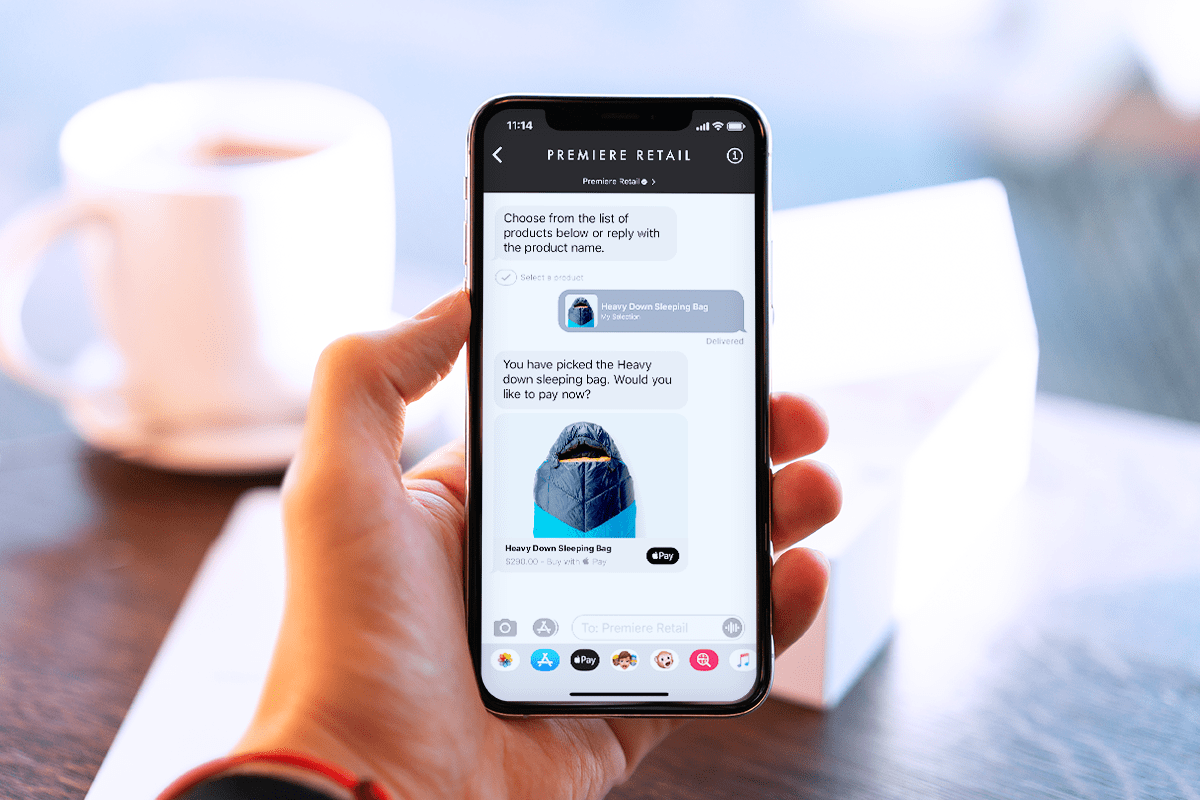
Your customers are already using their cell phone, computer, or tablet to browse your Shopify store. Why not give them the mobile experience they’ve come to expect. Quiq Messaging makes pre-sales support and post-sales service fast, convenient, and easy. Help customers find and select products all within a messaging conversation.

Watch this short video to see how Shopify retailers can use messaging. From completing transactions to shipping notifications, to give their customers a seamless shopping experience. That’s the power of conversational commerce. Schedule a demo today to see how easy it is to integrate Quiq into your Shopify store.

The Future of Digital Channels for Business Messaging

A couple of years ago, we were focused on educating the market on messaging and if messaging was right for their company. Fast forward to today and we’re working with over 120 clients such as Overstock.com, Pier 1, and Brinks Home Security. These brands have improved customer interactions with connected conversations and they are setting a new standard for the customer experience.

Messaging will continue to shape the way companies and customers engage as a growing number of consumers expect companies to be available through multiple digital channels. New research reveals that 70% of consumers have communicated with a business over text messaging or webchat 2 or more times in the last month.

The accessibility of messaging has been the primary driver for consumers adopting text as a preferred method to contact a company. As we mentioned in our post “7 Reasons Why Customers Want to Text You”, 97% of smartphone owners regularly use text messaging, making it the most widely-used basic feature or app.

The proliferation of smartphones, tablets, apps, and social networking has brought us to our current reality, where consumers readily look for and expect messaging as an option to engage with a company. It’s the convenience, faster response, ease, and familiarity that makes these digital channels the preferred way to engage.

Download a complimentary copy of “The Future of Customer Conversations”. You’ll get a deeper look into consumer expectations around messaging and how your company can prepare to seize this opportunity.

Quiq’s Business Messaging Platform

Why Use Quiq?

Create a personalized experience for your customers across all of the digital channels they already use. Channels like SMS /Text messaging, Live Chat, Facebook, Twitter, and your own app are the places your customers already spend their time. With all of these combined into a single business messaging platform, you can make it easy to engage with your company.

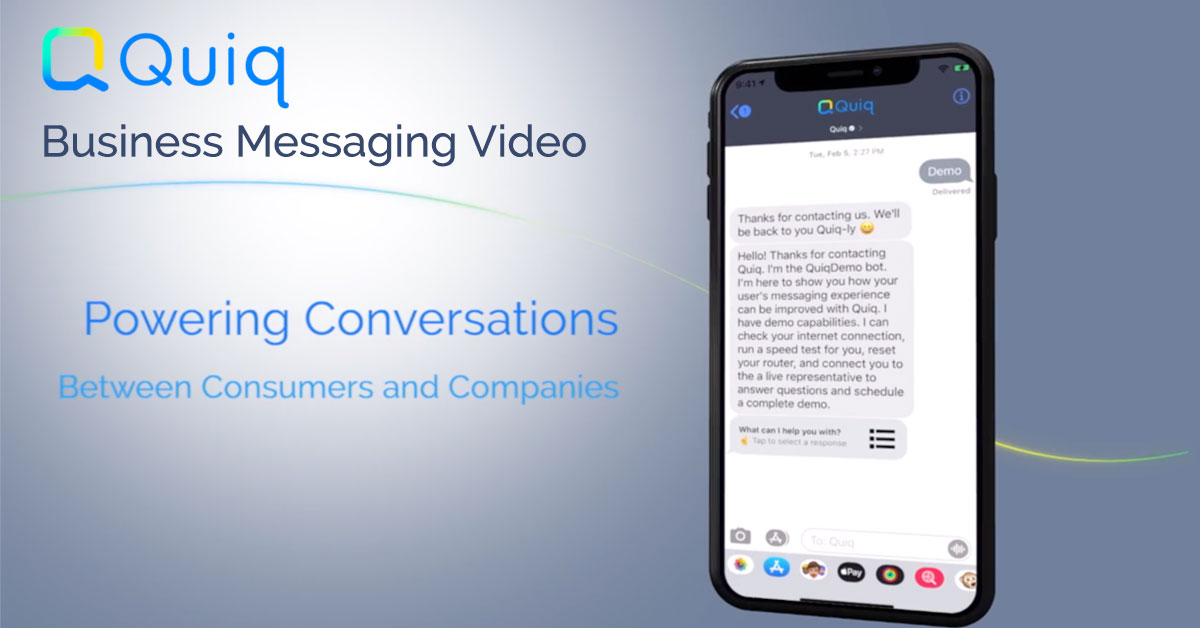
View the short video above to see how Quiq is transforming customer conversations. Then let’s talk so we can show you what this would look like for your business!

Four Ways to Rise Above Channel Fatigue

Consider for a moment the many ways customers are inundated with a multitude of brands, all vying for their attention. Take the email inbox, for example. Customers can’t unsubscribe fast enough from all the generic email newsletters they receive. The influx of email newsletters, social media messages, and online advertising adds up to marketing fatigue, a result of too many messages not relevant to customers. While messaging is still the most effective channel, with double the conversion rate of email, the way businesses currently communicate with customers needs to change.

Customers often unsubscribe, scroll past, unfollow, and mark as spam when messages are not relevant. What is the first sign your audience is experiencing marketing fatigue? A good indication is lower response rates, with even lower click and conversion rates.

Mastering the art of meaningful communication with customers is vital to keeping them interested, engaged, and connected. The best way to engage audiences has changed — expanding beyond the traditional phone and email, to reach customers how, where, and when they want to be reached.

A Better Way to Reach Your Audience

Web chat, in-app messaging, SMS/text messaging, social media — there’s a lot of service channels for customers to choose from (and for agents to manage!). It’s critically important for companies to consider how they define and manage communication at every step of the customer journey to ensure messaging does not add to customer and business channel fatigue.

People who are just starting their journey, in an information gathering stage, require a different kind of message than, say, a customer looking to upgrade their existing product. Don’t fall for the allure of making a hasty attempt to close the sale. Sending too many messages geared toward completing purchases to a customer who is firmly in the early stages of their journey will lead to annoyance, fatigue, and a bad taste in their mouth associated with the brand. Instead, the best way to craft the right message is to put yourself directly in the customer’s shoes  — and if you happen to sell shoes, who knows, they may just end up buying a pair!

So, how are companies battling marketing fatigue successfully reaching their customers?

Multi-Channel Messaging

The best way to prevent channel fatigue while reaching customers at the right place and time is to be available on their favorite channels. Multi-channel messaging makes your business available in all the places your customers frequent in ways that are most convenient for them — whether that’s on a Facebook Business Page, Twitter Direct Messages, Kik, SMS/text messaging, rich messaging (on Apple Business Chat and Google Rich Business Messaging), Web Chat, or In-App Messaging.

Transform how you engage with customers by letting them talk to your business the same way they talk to their friends and family.

Get Personal

Companies that put effort into understanding which channels are most important to their customers are better equipped to manage channel fatigue. For example, companies can optimize their communication and define message relevance customer-by-customer, based on behavior, demographics, preferences, journey status, and purchase data.

Another way to help customize the customer experience is to keep in mind the different tools customers use to view messages.

Messages sent over Web Chat are viewed on a computer most of the time, making Web Chat a better platform for sending resources, guides, and text-centric solutions. Alternately, Facebook, Twitter, Kik, and rich messages (all which are great for sending multimedia) would  most likely be viewed on a mobile device. In this case, you might opt to engage your customers with interactive rich messaging features like images, videos, gifs, emojis, and cards that can be inserted into conversations on social media platforms and business SMS.

Focus on Message Quality

Ensure that your messages provide your audience value by making them enticing and relevant.

Not every individual within a target audience will find relevance in mass messaging. With an audience full of customers at varying stages in their journey or simply at different income levels, personalization must go beyond just using first names or location. Rather than sending out one mass message across channels, the best way to engage a varied customer audience is to segment them out into smaller groups, and target messages from there — because if a customer clicks on a message to discover that it isn’t as relevant (or specific) to them as originally implied, they will lose trust in your messages and, subsequently, your business.

If your message is relevant to your audience, then format becomes less important. What matters is that you’re sending content that is low-effort to read and react. However, if your message is possibly irrelevant to certain customers’ interests, you should focus on capturing their attention while still keeping their effort levels low. Easy, fun, and visual is best — it gives your customers less to look through, making it a perfect fit for their busy lives.

Choose the Best Channel to Communicate

If your business keeps track of the content and frequency of your messaging, as well as your engagement across platforms and audience segments, then there are a lot of different communication channels to consider. The key is to make the most out of each channel.

Studies show that Business SMS/text messaging is the most effective channel to capture customer attention because it is a diversion from the typical email and promoted messages omni-present in their digital lifestyle, while maintaining the same level of immediacy. Text messaging is personal, download-free, and doesn’t require an internet connection. It’s also low effort to read and take action.

No matter what channel your customer base chooses to use, be sure to keep track of response and conversion rates to inform smart decision-making surrounding your brand communication. When it comes to platforms that give you insight and platforms that help businesses with messaging, Quiq doesn’t make you choose. By integrating directly into your existing CRM system, you’re able to continue receiving the reports that you know and love.

Fight channel fatigue with the proper strategy — focused on intent and personalized communication. Quiq Messaging connects your business to a variety of different platforms seamlessly. Want to learn more about Quiq’s multi-channel messaging platform? Request a demo!

Text Messaging Do’s and Don’ts

Cross-channel communication doesn’t just provide a more seamless user experience — it also keeps customers coming back. Companies who offer a cross-channel user experience have seen over 90% higher year-over-year increases in customer retention, according to Aberdeen.

Cross-channel engagement has been a blessing as well as a burden for some companies. On the one hand, businesses have more ways to interact with prospects and customers. On the other, all of these channels, be it social media or text messaging, requires companies to actually monitor, respond, and engage consistently with customers over all of these channels.

Cross-channel management doesn’t have to be a cumbersome exercise though. Today, it is imperative to business efficiency and effectiveness for all customer conversations to be in one holistic view.

The companies realizing the most success with cross-channel messaging are seeing a boost in customer satisfaction and revenue, with positive impacts on productivity.  Let’s dive into the ways that cross-channel messaging can be used to engage customers and drive more business.

Why Follow Proper Business Texting Etiquette

Following proper business texting etiquette[3]  is important for a very simple reason — your texts will be read. Unlike emails, which often pileup unread in a customer’s inbox, your text messages are rarely ignored. In fact, SMS open rates are as high as 98%, versus just 20% for email, according to Gartner. This makes the content and timing of your texts critically important in ensuring customer satisfaction. So what can your business do to ensure a positive SMS conversation experience?

The Do’s of Business Text Messaging

Do keep it to the point

SMS is appropriate for short and succinct messages. The length of a single standard text message is 160 characters, so that’s a good limit to shoot for. Of course, you can use rich messaging to send longer messages, but avoid sending walls of text via SMS.

Do ask permission first

Since text messages pop up front-and-center in a customer’s daily life, it’s important to make sure they give consent before getting the conversation started. Your first message can be a simple opt-in request, or your customers can subscribe to your texts via your website. If they send the first message, then their consent to receive a reply is implied but it’s still a good practice to ask permission before sending any unrelated messages, such as promotional texts.

Do stay positive

Keeping your text conversations polite and positive is essential, especially if you’re using the channel for customer support. Certain phrases may be misconstrued by the recipient, so make your dedication to customer satisfaction clear. While you do want to stick to the point, use complete sentences to avoid coming across as terse or impatient.

Do time your texts right

No one likes to be rustled awake by a midnight message, so make sure you send your business texts at an appropriate time. The best time to text your customers is soon after they text you. That way, you know that they are already engaged in the conversation. Similarly, you can reach out to them immediately after they opt-in to receiving your SMS, or right after they submit a support ticket. If you’re sending the first text, you’ll want to be mindful about the customer’s time zone and only message them during normal business hours.

Do get rich

Rich Communication Services (RCS) can transform your business texting into a full-on conversion platform. You can complete transactions, schedule appointments, and send videos to engage with customers in a more powerful way. Quiq’s cross-channel rich messaging automatically transforms your messages into the right format, so you can richly communicate over SMS, web chat, or Facebook Messenger — all from one centralized platform.

The Don’ts of Business Text Messaging

Don’t use unprofessional language

SMS is famous for acronyms but your business texts should avoid using them. Save your “LOLs” and “C U l8rs” for more casual conversations. That said, some emojis may be appropriate, depending on your audience — professional language can also have a bit of fun sprinkled in.

Don’t forget to double-check

For some customers, a misspelled word — or even an innocent typo — is unforgivable. Be sure to review your message drafts before hitting the send button. If your business uses message templates, revisit them periodically to make sure they are error-free and still in line with the tone of your brand.

Don’t wait too long to reply

Text messaging is all about rapid response. If customers don’t hear back from you quickly, they may move on to another service. Quiq’s Adaptive Response Timer prioritizes customer conversations for your agents based on how swiftly a customer stays engaged. If your agent cannot respond in time, the platform automatically hands the conversation off to the next available representative. With Quiq, there is no need to keep customers waiting.

Don’t rely solely on SMS

Text messaging is only one of the many conversation channels out there. Your business should use it as just one part of an overall customer messaging strategy. Understand the benefits of SMS alongside its limitations, and see where it fits in your conversation ecosystem.

By following these tenets of business texting etiquette, your brand can connect with customers in a more powerful way. Discover the true potential of business messaging and try a demo of Quiq today.

eBook: Business Messaging Best Practices

Business SMS/text messaging is the fast, convenient, and preferred way for customers to engage with you.  According to research, “mobile messaging the communications channel with the highest anticipated growth.”

Done correctly, messaging is a powerful tool to help consumers connect with businesses – especially when it comes to customer service.

Business Messaging Best Practices eBook

5 Ways To Build A Chatbot To Improve Customer Service

Chatbots, or bots, are at the top of countless Google search results these days. Why so much research and chatter about bots? Faster customer service and a better customer experience are just a couple of the ways companies believe bots can drive results throughout the organization and it’s making a stir.

A lot of people have gone past the point of wondering how to employ chatbots within their organization to actually building them. While there are plenty of tools out there to help you drag and drop your way to an AI-infused representative, you’d be ill-advised to jump right into it. Before you build a bot, there are some important things you need to consider.

In this article, we’ll explore 5 key considerations to get you started on a better chatbot path. Incorporating these concepts into your strategy will ensure you build a bot that improves your customer engagement and their experience.

When To Use A Bot

Sometimes having too many options can lead to confusion and indecisiveness. That’s not the case when it comes to bots. The meteoric rise of the digital channels used throughout companies to drive better customer experience has resulted in exponential demand for chatbots. Chatbots are being deployed from customer service to sales and marketing across channels such as web chat, SMS/text messaging, and social media.

The opportunity to use bots within single or multiple points in the customer’s journey seems crystal clear to many. The question isn’t whether you should use a bot within a conversation. The pressing question seems to be when is the appropriate time within a conversation for a bot to engage with a customer.

Before you answer that, consider these bot must-haves. In our experience, working with clients from a variety of industries, these 5 bot approaches ensure companies deliver better bot experiences.

1.Build A Bot To Offload Repetitive Or Mundane Tasks

What’s your order number? Can I verify your email? What model is it? Can you verify your address? How many times have your human agents had to ask these questions? Short answer, too many. With chatbots, the better question is how many times does a human agent have to ask these kinds of questions? Short answer, zero. Zilch.

These questions, and many more, are super simple and repetitive. The answers are fairly straightforward and necessary to help a customer and move them closer to resolution. One of the first things to do prior to building a bot is to define the parts of the typical customer interaction that could be handled by a bot, where that is prior to, during, or after an interaction with a human/agent.

Quiq clients have realized success by building bots to handle some of these simple questions, with the intent of providing human agents with more information faster to ensure they understand who the customer is and the issue at hand.

2. Build A Bot That Works With Your Current Processes

You shouldn’t have to revamp your entire workflow in order to implement a bot. Make sure your bot or bots work within your current process to improve it.

Consider using bots throughout the customer’s interaction to expedite established processes. For example:

      • Deploy bots at the beginning of customer conversations to collect information, gather relevant details about the nature of their inquiry, and to even route the customer to a specific person, department, or queue.
      • Allow your human agents to transfer to a bot during their conversation. Bots are able to collect information during a conversation to free up human agents for more complex tasks or to help other customers.
      • Let your chatbot close out the conversation with a simple thank you, or even better, a quick survey to gather feedback.

3. Build A Bot That Works Well With Humans

Our messaging clients frequently look to chatbots as a way to help the human interaction, not replace it entirely. Quiq clients have realized a lot of success from using bots to work in conjunction with humans.

As mentioned above, bots can be used in any one or multiple parts of customer interactions. Before you build your bot, make sure you’re creating a seamless experience for your customer as well as your agents.

Quiq’s messaging platform enables agents to transfer conversations to a bot, just like they would another human agent. Once the bot completes gathering whatever information they need, the conversation is transferred back to the human agent.

4. Build A Bot That Plays Well With Other Bots

Just as a conversation can be volleyed between human and chatbot, make sure that your conversations can be transferred to other bots.

Take, for example, a bot that greets your customer, asks how they can help, and presents suggested solutions. Your customer can choose the appropriate topic with a single tap. Based on their response, another bot can pick up the conversation and bring the customer through the selected process.

Quiq is unique in that you can deploy any combination of 3rd-party bots and/or Quiq bots in our system and they are treated the same. The focus is on helping the customer, not on technology.

5. Monitor Bot Performance

Improving customer engagement and experience doesn’t stop when a bot or multiple bots go live. Once you’ve implemented your bot(s), monitor performance the same way you’d monitor a human agent’s performance.

Quiq’s messaging platform reports on bots and human agents the same way. Our platform monitors the customer’s experience and provides actionable feedback, such as the customer’s sentiment during the conversation, regardless of who is helping them. Simple icons alert managers if a customer is using negative words or phrases that signals intervention is needed.

Receive the same types of stats for bots that you have come to expect and demand for agents.

Messaging Conversations Are Ripe For Bots

These critical must-haves for building a better bot should help you answer our question above: “When is the appropriate time within a digital conversation for a bot to engage with a customer?” The answer depends, of course, on the unique needs of your customers and the reasons they reach out to you.

Quiq can help you deploy bots throughout your organization that work seamlessly across chat and messaging channels. If you’re ready to take the next step to building a better bot experience, request a demo.

How to Choose the Best Live Chat Software for Your Business

A software investment of any kind takes due diligence, and purchasing live chat software should be no different. The live chat experience that you provide reflects the quality of your brand as a whole, which makes it critical to only use the best website chat software possible. When potential customers visit your website and want to get in touch with you, business messaging channels, such as live chat, are the fastest and easiest methods available.

Every live chat solution, in its simplest form, should make it possible for your company to connect with your customers while they are on your website. But that doesn’t mean every live chat solution is right for your business. In this post, we’ll take a look at how you can determine which website chat software is best for your business.

Determine Which Features are Important to You

There are some universal features you should expect when investing in any software such as:

  • Implementation guidance that can help you on a successful start and use of a product,
  • A history of reliability to avoid being plagued by downtime, and
  • A commitment to security, such as being SOC II compliant.

These features are just as important when purchasing live chat software. You’ll also want to consider answering questions about why you need a business messaging solution like live chat and what type of experience you want to deliver. Here are a few questions to consider:

  • Where do people get hung up on my website? Do they need the most help searching for products, understanding pricing, booking an appointment, or placing an order?

Some companies choose to have chat available on specific pages, while others offer chat on every page. The live chat solution you choose should be able to provide both options.

  • Do I want to offer a reactive chat experience and let customers reach out whenever they need help or do I want a proactive chat experience that invites customers to chat with us?

No one will know your business better than you do. There is no one-style-fits-all for live chat. Ensure that you have the option to provide proactive or reactive chat to your customers.

  • Do I want to customize the look of my chat?

Your live chat should be a reflection of your site and your brand, so make sure you work with a platform that allows you to customize colors, greetings and other details within the chat experience to fit the look and feel of your company.

Answering these questions are a good and basic foundation for choosing the best live chat software for your business. Let’s take a look at some of the more advanced features of live chat that you’ll want to consider.

Critical Aspects of Successful Business Messaging Software

When customers visit your site and fire up your chat feature, they’re looking for a quick response time and quality service. No one wants to send off a message to a business and wait until you get a chance to get back to them. If that was the case, they would have sent an email.

Some wait time before chatting with a human might be acceptable, but why make it the rule when it could be the exception? A modern chatbot messaging solution allows instantaneous and high-quality responses that can seamlessly greet customers, gather information, and point customers in the right direction or even hand the conversation off to a human.

The ability to start a conversation, determine the intent, and route the conversation to the appropriate person, all before a human agent accepts it, make intelligent chatbots a non-negotiable attribute for any web chat software. Chatbots can offer suggestions based on customer feedback or route your visitors to the appropriate human agent if need be.

But chatbots are only one aspect of a multitude of advanced features to consider. Chat technology has evolved and now offers features that deliver a better experience for the customer and the agent. For example, Quiq’s messaging software can tell your agents which page your visitors are on when they click to chat with you, present their entire chat history with your company, and even monitor how the conversation is going based on sentiment analysis.

Look for Rich Messaging Solutions

Nowadays, communicating online goes far beyond text-based chat alone. Short videos have become a language in and of themselves, and entire conversations can be carried out through emojis. Chat software that includes rich messaging capabilities allows you to raise the bar when it comes to business chat, and offer more fun, immersive, and interactive experiences.

With rich messaging, you can complete transactions, schedule appointments, and even send rich media to engage your customers in a deeper way. Look for a web chat software that supports rich messaging so your business messaging can stand out.

Choose Capable Analytics

Business messaging can give important insights into what’s working and what’s not when it comes to products and promotional strategies. The data you gather from your company chats can be critical to developing new strategies and adjusting business processes.

The ideal web chat software should allow you to report on conversations, queues, or agent performance – human or bot. Look for a platform that lets you export your data or even integrate it into an existing business intelligence platform.

Only Settle for Asynchronous

Customers can’t always afford to stick around until the conclusion of a chat conversation. Asynchronous messaging platforms allow conversations to pick up where they left off, so they don’t have to endure the inconvenience of a chat conversation timing out and then restarting a new conversation. Your live chat solution should deliver a frictionless experience for your customers and allow them to set the pace of the chat. Quiq Messaging provides asynchronous communication across all supported channels, so even if your customer has to step away or gets distracted from the chat conversation, they can pick up right where they left off.

And the Winner Is…

When we take into consideration all of the factors listed above, there emerges one clear winner in the chat game. Quiq offers an all-encompassing messaging solution for businesses looking to drive conversions and provide more capable customer support. We’ve only scratched the surface on what Quiq can offer here — robust analytics, asynchronous conversations that provide a frictionless experience, and solid security all fall within the scope of this powerful platform.

When you’re ready to discover the true potential of business chat for your enterprise, schedule a demo today.

5 Ways Rich Messaging for Customer Service Transforms Customer Expectations

Remember when using acronyms like LOL, BRB, and BTW were the only way to express yourself on a text message? For a clever few, with a little time on their hands, the use of textual characters morphed into a new form of art to help convey a message. Who knew everyone would use it to communicate visually ¯_(ツ)_/¯. Fast forward a few short years and you’ll find the insurgence of rich messaging has us sharing the kind of rich media we could only dream about back then.

Rich messaging allows companies and customers to exchange hi-res images, videos, gifs, and even complete sales transactions all within a text messaging conversation. Rich messaging, aside from providing a more modern messaging experience, has the power to change the expectations of your customers. In this post, we’ll look at 5 ways rich messaging is transforming customer expectations for customer service.

Rich Messaging Basics

Although we’ve provided a pretty in-depth primer on rich messaging in a previous post, we wanted to remind you of the basics before we dive too deep into how this new way of messaging is changing the way customers are engaging with companies. Here’s what you need to know.

First, rich messaging is a new standard of text messaging that’s already been adopted by Apple and Google, plus a lot of well-known brands like Overstock.com and Brinks Homes Security. Much like SMS, which is the simple text message limited to 160 characters that most people are used to, rich messaging provides customers and companies a way to exchange concise messages over mobile devices. That’s the messaging part. Unlike SMS, rich messaging allows messages over 160 characters, high-resolution images, videos, and a whole suite of other features that make it a better experience than a simple SMS message.

Rich messaging isn’t just about images though. Rich messaging is really about meeting customers’ expectations of convenience. High-resolution images and videos help to convey a message, but that’s only part of the story. The ability to complete transactions within a message or present customers with suggested responses, enabling them to reply to an agent with a tap of a button, adds elements of speed and ease to interactions that consumers expect.

As customer expectations of service continue to increase, rich messaging will help shape their expectations. Here are 5 ways rich messaging for customer service will change customer expectations.

5 Transformative Ways to use Rich for Customer Service

1. Provide responses better and faster than phone and email

There is no doubt that today’s consumer is busier and on-the-go more than customers were even a decade ago. They expect rapid responses and want to communicate one-to-one with businesses – all on their terms. We can thank the digitization of everything from media to services for shaping consumers’ on-demand expectations.

By leveraging rich messaging, businesses can provide their customers with the same type of on-demand support that on-demand products deliver by removing some of the friction around engaging with a company. For example, if a customer searches for a company on their iPhone that has implemented Apple Business Chat, they can immediately start a messaging conversation simply by tapping a “message” icon in the search results. No need to call the company. The customer can simply message what they have to say.

2. Share media that tells a story

Rich messaging isn’t just a pretty face, or GIF rather. The ability to share videos, recordings, hi-res images and yes, even GIFS has been a gamechanger. The ability to share rich media, up to 10MB per message to be exact, makes it easier for agents and customers to help with purchases or troubleshoot issues.

For instance, customers who want to shop around for a new security system can send a picture of their current hardware to see if it’s compatible with the prospective company’s monitoring or if they’ll need to purchase new hardware. This eliminates the need to schedule an appointment for a technician to come to their home to see their current setup, which means less time and hassle for the customer.

3. Allow customers to complete transactions

Rich messaging is all about making the entire experience with your business as convenient as possible for your customers. There are a plethora of use cases and industries where the value is evident, but none so much as retail.

From browsing for a product to buy to completing transactions, rich messaging can help companies support customers through their entire purchase lifecycle. Helping customers navigate a site or find options within a product assortment can easily happen without the customer switching channels.

With rich messaging, customers never have to leave the messaging channel to complete their transaction. Instead of shoppers clicking around to check out, agents can send transaction cards, where customers purchase through a secure cart.

4. Enable customers to make reservations

It’s not just retailers selling tangible goods that can benefit from rich messaging. Services, consulting, travel and hospitality, or any industry where booking an appointment or making a reservation is important should be interested in using rich messaging.

For example, a hotel can a send reservation card to prospective guests allowing them to make an instant booking. The key word being instant. According to Statista, online travel sales are expected to hit a staggering 755.94 billion U.S. dollars in 2019, with mobile travel sales making up 95 billion U.S. dollars.

Going to travel agencies and booking by phone has become a memory only a dwindling few can recall. Travel and hospitality have set the precedence for making reservations. After all, if you can book a houseboat in Bali for 6 months from now from your phone, shouldn’t you be able to schedule your local lawn service next week with the same amount of ease? Making online reservations, with a focus on mobile reservations, a feature is more crucial than ever for companies that care about increasing revenue.

5. Give customers peace of mind with identity verification

Robo-callers with scam offers and bulk SMS messages from shortcodes that can’t be identified are becoming more commonplace. Consumers are becoming more aware and wary of such behavior and won’t hesitate to block numbers or type “Stop” to avoid receiving further communication.

Rich messaging gives your customers peace of mind that they are talking to the trusted brand they intended to engage with. With rich messaging, companies go through a rigorous verification process. Once verified, the company can use their official brand name, colors, logo and font in their messages.

Rich messaging adds another layer of trust to customer service communications. Regardless if the customer receives an outbound message from your company on their Android device promoting a new product or they send in a text message to troubleshoot an issue with a product on their iPhone, they’ll have the confidence that the information they share is private, secure, and going to the right place.

Rich Messaging Behind the Scenes

In addition to all of the features mentioned above that make rich messaging a better experience for your customer, the ability to understand how your messages perform allows companies to understand and improve engagement behind the scenes. Quiq’s messaging platform gives you key metrics for messages that were sent, delivered, failed, and responded to

Rich messaging doesn’t have to be limited to text messages either. Clients using Quiq are able to provide rich experiences to users across chat and other business messaging channels as well. This means that companies can provide content-rich, personalized experiences across SMS/text business messaging, web chat, social, and even within their own app when using Quiq. Ready to take transform your customer service with rich messaging? Schedule a demo to see Quiq’s messaging platform in action.

Forrester Webinar: Connecting with Customers Through Messaging and Bots

Consumers’ Expectations Around Engagement

Today’s consumers’ expectations around engagement have driven companies to “up-level” their accessibility and responsiveness. In this on-demand webinar, Kate Leggett, Principal Analyst at Forrester Research joins Mike Parish, of Brinks Home Security, to discuss how to connect with customers through messaging and bots.

As the leading expert on customer relationship management (CRM) and customer service strategies, Kate shares deep insights into the consumer behaviors that are shaping how many of the leading brands leverage messaging and bots to better engage with their customers. Mike Parish, Director of Experience and Service design at Brinks Home Security reveals the results and surprises of implementing messaging and bots.

About Quiq

Quiq makes it easy for customers to contact a business via Messaging, the preferred channel already in use with our friends and family.  With Quiq, customers can now engage with companies via SMS/text messaging, Facebook Messenger, Web Chat, In-App,and Kik for help with their pre-sales and post-sales questions. Learn more about Quiq today!

See a Demo Today

5 Ways Live Chat Drives Revenue

Using live chat to drive more revenue is just smart business and plenty of companies have embraced this technology as a way to grow their top line. Live chat is always on and at the ready to greet website visitors, field inquiries from prospective customers, and connect consumers to the help they need. It’s really no surprise that live chat has evolved from “nice-to-have” on a website to a necessary feature. There are so many companies currently leveraging the power of live chat and seeing their numbers grow in terms of both revenue and new customers that we felt obliged to highlight 5 of the top ways live chat drives revenue. Looking for a way to build customer loyalty, increase customer retention and boost your average order size? Read on.

Key Stats on Live Chat for Business:

Before we jump into the meat of things, let’s start with a few statistics to whet your appetite on how live chat for business is driving more revenue. Consider these important stats that showcase how valuable this channel is to your business:

How Live Chat Drives Revenue

1. Live Chat Closes More Sales

Online chat provides the opportunity to speak with a customer when the interest in your product or service is at its peak. With chat, customers can get questions answered and concerns addressed before that interest waivers. According to sales consultancy firm, SalesforLife, chat delivers a 20% boost in sales conversions. This can be attributed to the immediate response to specific needs that move the prospect through the buyer’s journey. Consumers know there’s always some risk with a purchase. “Buyer Beware” hasn’t become a saying for nothing. But the ability to have a real-time chat conversation with a representative prior to purchase gives the buyer confidence in doing business with your company because they know help is accessible

2. Live Chat for Business Increases Customer Retention

Live chat is one of the most immediate forms of communication available to online customers. In today’s always-on-the-go world, people want to get answers fast. Your customers will not wait for hours to get an answer through outdated methods, like filling out a form on your website to submit a question and then…you guessed it, waiting for a reply to hit their inbox. When it’s all said and done, meeting your customer’s expectations of delivering fast, personalized service builds customer loyalty and the economics of customer loyalty definitely work in your favor. According to Harvard Business Review, increasing customer retention by as little as 5% can increase profits by 25% – 95%.

3. Live Chat Delivers a More Personal Experience

With the use of live chat for business, you can talk to your customers or potential customers on a much more personal level. Live chat allows you to ask probing questions, provide suggestions, and even offer complementary goods or services based on direct interaction with that customer. Consider this example: A mom is shopping for a bassinet for her newborn. Without any engagement, the customer may just add the item to their cart and checkout, Or, she may get frustrated with all of the choices and tire of reading reviews and look elsewhere. Now, consider the scenario with engagement from a live chat representative. After so many minutes on the product page, a chat window pops up and asks the customer “Can I help you find anything?”. The customer shares what she’s looking for and the agent helps her narrow down choices. In addition to helping her find a bassinet she loves, the representative suggests sheets and some popular sleepwear to add to the cart. This customer-centric approach leads to higher satisfaction rates not only because they are getting fast responses, but also because they are getting the answers that are specifically targeted to helping them with their questions. According to Econsultancy; 73% of their customers were satisfied when they talked engaged on live chat.

4. Live Chat for Business Builds Momentum

You did the work and drove traffic to your website. You’ve got consumers coming in and you need to follow up fast to keep the momentum going. If your shoppers filled out a form so they can be contacted, there’s always a chance that the customer may have failed to provide the right information or made a mistake when entering their contact information. What will you do then if you can’t follow up? You lose the sale. There’s also the chance that a competitor could catch your shopper’s interest while they’re waiting to speak to a representative who can help them make a decision.. Give your customers the opportunity to start a conversation in real-time, when they are most excited about learning more about your product or service and focused on you.

5. Live Chat Increase Order Value

Average order value (AOV) is a key metric to gauge how much revenue a company generates with each transaction. A growing AOV is an indication that either customers are buying larger ticket items per transaction or buying more items in a single transaction. Either way, life is good.   Live chat gives trained agents the opportunity to upsell and cross-sell and influence average order value. Agents can present complementary items or higher ticket purchases to consider. Many times, companies decide to implement chat so that help is available when customers need it and chat sessions are initiated when the customer requests it. In some instances, like what an item is added to a cart, some companies have implemented proactive chat to offer customers additional items they may find valuable.

Brinks Home Security™ Monitors and Responds to Changing Market Demands

Q: What motivated Brinks to look at messaging as a way to connect with customers?

A:  More than 90% of all of our transactions were phone-based. Taking time to make a phone call was a rigid, inflexible pain point for our customers. We wanted to provide a channel that put the format back in the customer’s control.

Unlike phone calls, customers and agents are able to exchange and share attachments, links, gifs, and emojis making the interaction context-rich. These rich messaging interactions help agents understand the question faster and thus ensure customers quickly receive the help they need to resolve their inquiry and get on with their day.

ROI From the Start

Messaging has dramatically and positively impacted the contact center. The first thing to note was the fairly immediate shift of 10% of phone calls to messaging. There is also a significant difference in agent productivity. With phone calls, agents can only handle 1 at a time, but with text messaging, the agents handle from 4-6 unique conversations at a time. Even with an increase in the number of conversations each agent has, there has still been a 14 ppt.(avg.) uptick in CSAT. In fact, Brinks is watching the satisfaction rate with text messaging continue to climb, all while seeing staffing savings.

“In a short 5 months with Quiq, we converted 10% of phone calls to messaging, and we are on track to move 20% of our inbound calls to messaging.”

Mike Parish, Sr. Manager Customer Experience & Service Design, Brinks Home Security

Giving Control Back to Customers

Converting 10% of their inbound phone-based customer contact to a digital messaging experience in 5 short months, the company saw a noticeable difference in how customers and agents interact. Messaging allows customers to have conversations at their desired pace, while enjoying an experience that is as familiar as texting with family and friends.

Brinks proactively promotes and encourages their customers to engage with them via text messaging. Visitors to brinkshome.comare able to initiate a conversation with an agent through a “Text Us” link displayed prominently above the fold under “Contact Us”. Website visitors may also choose to engage by clicking the “Chat with us” icon on the lower right-hand side of the screen displayed on every page.

Phone with texts

As with any new software implementation, Brinks had a number of assumptions going into their exploration of the messaging channel:

  • Our customer base is older and will not utilize text
  • Customers want to call or email us, not text
  • Customers will want to text for this, but not for that

What Brinks discovered as a result of implementing Quiq Messaging was a reality that was a very pleasing contradiction to those beliefs.

Across their customer segments, text has continued to ramp, regardless of age-related demographics. In fact, the slowest month-over-month growth for the messaging channel has been a 135% increase, with the highest monthly increase at 329%. Not only has the messaging channel proven to be a preferred method of engagement, but agents handling the exact same contact types on the messaging channel as they did with phone with a higher average CSAT score.

Messaging Rollout Recommendations

Q: Based on your experience with messaging, what are some key takeaways you would share with CX leaders who are considering opening the messaging channel?

A: One of the biggest lessons learned from the messaging channel has been promoting the channel. It is important to leverage every engagement or touch point to help build awareness and grow a new channel.

That may mean promoting it via social media, outbound emails, newsletters, on the primary website, mobile website, and even in your IVR messaging. Just letting customers, who are calling in, know that they can hang up and text your brand directly will immediately shift calls to text messaging.

When promoting the messaging channel, Brinks also recommends that companies alter their campaign approach monthly, starting with awareness, next adoption, and finally growth. However, the most important thing to do is to avoid letting assumptions prevent success and to lean on your Voice Of Customer (VOC) data to drive you.

Focus on Continuous Improvements

In an effort to measure and continually improve on the digital experience, Brinks built out a short survey and implemented it by automatically sending a link at the close of each text message conversation. The survey questions emulate the main questions used to calculate customer satisfaction rates (CSAT) and Net Promoter Score (NPS). Issuing a satisfaction survey via text instantly yielded a 10% completion rate, which is a 60% increase over surveys delivered over traditional channels.

“Our messaging solution started out as an alternative to offload high call volumes and repetitive tasks, but now we have now expanded the implementation and smart routing throughout the entire enterprise.”

Mike Parish, Brinks Home Security

A smooth implementation of Quiq’s Messaging platform set the stage for the high adoption rate of messaging among agents and customers. Brinks has been pleased with how quickly their customers has embraced the messaging channel.

The company plans to continue promoting the channel so that at least 20% of their interactions are over messaging or web chat, as well as completing Quiq’s integration into Brinks’ IVR system and introducing automated SMS notifications for service updates. The company had originally planned to hit that 20% target in 12-18 months, but with the rapid acceptance and use of messaging by their customers, Brinks expects to hit that goal much sooner than expected.


Contact Us