
• Don't miss our webinar: Take Your Omnichannel CX to New Heights: How Spirit Airlines Is Upgrading Self-Service with Agentic AI  Watch now -->

How Stio Geared Up For Growth

Since opening its doors in 2012, Stio has embraced a direct-to-consumer model selling high-quality, active apparel for outdoor enthusiasts online and in-store. Clearly, the market has embraced them right back, experiencing rapid growth, especially in eCommerce which makes up 75% of the company’s revenue.

The mountain lifestyle brand, headquartered in Jackson Hole, Wyoming realized that it had to scale its digital customer experience to keep up with that growth. The company looked for technology that was just as adaptable and functional as their gear, turning to Quiq’s messaging, web chat, and bot platform for support.

The Good Problem of Growth

Stio's use of web chat messaging bots for retailers has helped the company deflect phone callsWhen Kim Essensa, Stio’s Customer Experience Manager, joined the company in June of 2018, Stio had been experiencing annual growth rates of 52 percent. In the second quarter of 2018, Stio’s growth accelerated to an impressive 70% year over year.

That kind of growth comes with a few growing pains, especially in a contact center of 7. Based on previous experience in both her personal and professional life, Kim felt that live chat could help alleviate some of the load. The company already had a simple version of live chat available on their website but hadn’t turned it on. Her instincts were right. Turning on web chat helped the contact center feel an immediate relief.

Kim knew that text messaging was the next natural progression for engagement with consumers. While she had experience with other vendors like Live Chat, Olark, and Boldchat, she knew that having SMS and text messaging were key to take the company to the next level. Kim had used Quiq at her previous employer and evaluated it for Stio, knowing that it was going to have to make an impact on their efficiency, while working with their current systems.

“A few other programs were vetted. The relationship I had with Quiq before and knowing how responsive everyone is there, especially with tech issues, is what made Quiq stand out for me. When something is not working, you just need it fixed.”

~Kim Essensa, Stio

Quiq fit with the vision of where Stio wanted their contact center to be and the company went live with Quiq’s web chat on October 1. Implementation was short and successful, and employees only had to receive a small amount of training to get started,

“The platform is so intuitive and easy to use that the amount of training it takes to give it to my staff was super minimal,” says Kim. Having Quiq in place with a trained and ready staff was crucial since Q4 was looming on the horizon and like other retailers, the holiday season would make up a good portion of the company’s annual revenue.

Improving Efficiency

Before the holidays, Stio onboarded an after hours contact center to handle chat when the in-house team was offline. The after-hours answering service has been able to take some of the pressure off of Stio’s team during business hours as well, easily managing chat on Quiq’s messaging platform with very little training or day to day management from Kim and her team.

The increase in productivity helped employees and customers over the holiday season. Kim puts it this way, “Last year we were leaving the office with 300 emails in the inbox. This year we’re leaving with like 30.” After the holidays, Stio turned on text messaging and saw call volumes drop by 9%.

“Agents love Quiq. It’s just intuitive and super easy to use.”

~Kim Essensa, Stio

Now, Stio’s agents handle inbound messages from SMS, web chat, and Facebook Messenger all within Quiq’s intelligent workspace. Questions are typically focused on orders, with inquiries around shipping status or price adjustments. Now, if a customer just placed an order and the final cost didn’t reflect the promo code entered, they don’t have to call in and wait on hold for help. Now, they can send a text and get a faster response, since Stio’s agents can handle multiple conversations simultaneously.

Bots

In 2019, Stio took another step toward more efficient operations. Stio was one of the first companies to embrace Quiq’s bots across their messaging channels. Kim worked with the Quiq team to scope out what the Stio bot experience should be. It was important for Kim to keep the bot language short, simple, and casual, so it would feel like consumers are engaging with a human. It was also important to give customers easy access to a human agent whenever they wanted . Within a few days, the bot was up and running on the site.

Stio saw immediate results from implementing bots. The company, which drops 1.2 million catalogs for the holidays, used to take requests from customers who wished to be removed from the physical mailer. Today, a bot does it all on behalf of the agents- from beginning to end. During the first two weeks after implementing this single bot, Kim saved 83 precious agent hours on the catalog process alone. Agents can now concentrate on helping customers find the gear they want instead of managing catalog removals.

Quiq’s Shopify Integration

Stio recently integrated Quiq Messaging with their Shopify account. This integration gives agents incredible visibility into what the consumer is doing. They can see which web page the customer is looking at and what’s in their cart in real-time. According to Essensa, this has drastically reduced the time it takes agents to collect that information from customers and makes the experience smoother and faster for customers.

Stio is focused on keeping their agents available for customers who need human attention. That’s why they’ve introduced bots. When a customer uses messaging, a bot will collect core information from customers and take action on that information, sending the conversation to the best-suited human agent.

Kim believes the integration of Quiq and Shopify will increase overall cart value and conversions because agents will be better equipped with the information they need to close the transaction with the customer.

What’s in Store For Messaging

Stio is approaching conversational commerce from a very personal level and they are using technology to help “For us, it’s that natural conversation between the customer and the agent. We really want the customer to feel at home with Stio, like they’re talking to their best friend who just recommended the best ski kit in the world. We really try to make it a personal experience.” states Kim.

Stio continues to look for ways to make their customers experience more fluid and personal. “From the epic to every day”, that’s the mantra that inspires the team at Stio to create gear known for technical performance, quality, and versatility. Leave it to them to bring that same ingenuity to their customer experience with Quiq’s messaging platform.

Let’s put technology to work for you in your company to streamline workflows, increase efficiency, and deliver a seamless customer experience. Schedule a demo to discuss messaging and how Quiq can work with your company’s unique processes and systems.
See a Demo Today

What is Digital Customer Service?

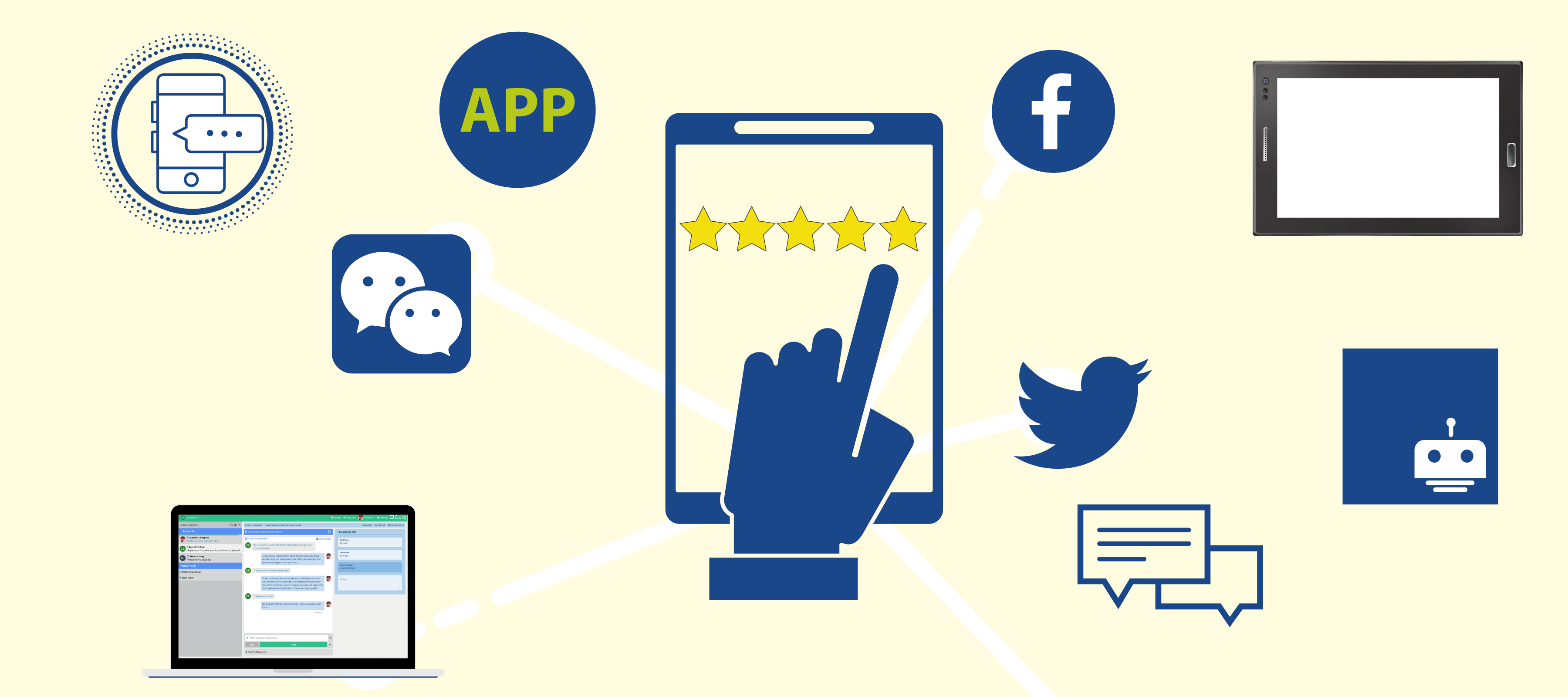
When defining digital customer service, it may be easier to say what it is rather than what it isn’t. In order to do that, let’s define the opposite of digital customer service as “traditional customer service.” Traditional customer service takes place over the phone or after waiting in line to speak to someone face-to-face. On the other hand, digital customer service means serving your customers across digital channels. These channels would include email, SMS / text messaging, live chat, Facebook, Twitter, WeChat, and more.

Digital or online service channels have exploded. Consumers love having a wide variety of ways to reach out to a company, because it means they can pick the channel that is most comfortable or accessible to them – versus being forced to make a phone call. It means companies can deliver a great experience, with less work, and that means a lot.

The asynchronous nature of digital service means that agents can handle multiple simultaneous conversations. Customers don’t expect an immediate answer, which gives agents the ability to address more than one inquiry at a time. It also gives customers the freedom to set the pace of the conversation.

Digital Customer Service Solutions Today

Digital channels that once were new and novel are now the norm, like email and Facebook. However, digital channels continue to expand, as well as the technologies that support them. For example, Apple and Google have taken plain text messaging and made it rich. Rich messaging allows for secure payments, scheduling appointments, and the ability to share more sophisticated content. Also, chatbots can be part of nearly every digital interaction and can be deployed as a great compliment to human interactions.

The ubiquity of mobile devices to research, browse, shop, and purchase products has created the need for more web-based service channels that offer assistance without requiring customers to find time to pick up the phone and call a company. Thus, we have seen the the increase of digital customer service solutions and the ability to assist your customers on their digital channel of choice.

Your customers expect a seamless, convenient, and easy digital experience whenever they engage with you. Whether they are looking for help while shopping on your website, trying to book an appointment in your mobile app, or contacting customer service through a Twitter direct message with a question about their order.

Digital customer service can go by other names such as digital customer experience, digital customer care, or digital customer support. Regardless of what you call it, the definition is the same – serving your customers across digital channels and platforms such as SMS/text, live chat, and social platforms like Facebook, Twitter, and WeChat.

Increased Demand for Digital Customer Service

There are four main reasons companies pursue a digital customer service strategy:

Customer Preferences

Forrester’s executive report, The Digital Customer Experience Improvement Playbook, succinctly sums up the current state of affairs for customer service:

“Customers demand that their digital interactions with your brand be seamless and span devices; that they be able to engage with your brand whenever and wherever they’d like; and that every encounter meet their needs in the moment.”

Companies are adopting a digital-first approach to meet customers wherever they are. Customers demand their channel of choice, whatever that channel may be, to engage with a company. That’s why so many service and support leaders across all industries, in companies of every size, are offering digital channels like SMS, WeChat, and Facebook for customer service and support.

Competition

As consumers seek companies that are easy to engage with, competition continues to offer more options. Customer service organizations are rapidly adopting digital channels and capabilities to meet customer needs and set them apart from their competition.

Cost

Gartner estimates that live channels such as phone, chat, and email can cost an average of $8.01 per contact vs. $.1o to serve on digital channels. Service and support leaders who use these channels as their primary customer contact methods are under pressure to reduce the cost to serve customers.

Scaling

The 2019 holiday season saw mobile sales via smartphones break the $3 billion mark according to TechCrunch; up from the $1.5 billion spent on Cyber Monday a year prior. Scaling resources to meet increased demand, especially from consumers that instinctively reach for their mobile device to engage with companies throughout their entire purchase, is another reason digital customer service is on the rise.

Leaders facing these challenges turned their focus to improving how, when, and where they serve their customers across digital channels with the intent of putting the customer at the center of it all.

And by doing so, they have impacted their business by:

  • Engaging with customers they normally would not have reached
  • Differentiating themselves with easy and convenient access for customers
  • Reducing costs with the shift from phone calls to digital
  • Increasing customer satisfaction with much preferred digital channels

Digital Customer Service – Who’s Doing It Right

A quick glance through the client section of our blog will give you an idea of just some of the diversity we see in industries and use cases. But let’s take a closer look to see what a few of these companies are doing and the results they’re achieving,

Increased Engagement

Overstock.com has seen a 98% open rate when communicating with people through texts. As of today, over 15% of all contacts that used to come in via the phone are now coming into the contact center via text.

Aspira, helps people book and manage outdoor recreation reservations. They receive about 300 to 400 texts a day. The ability to text for help is particularly helpful since their clientele is usually in transit to, or already on-site, at a campground or park facility.

Higher Customer Satisfaction

The Laundress has been able to offer a more personalized, “high-touch” experience for the customers of the high-end brand of soaps, detergents, and cleaning supplies. Since implementing Quiq, the retailer handles everything from questions about scents and order status to product recommendations all through text.

Reduced Costs

Outdoor gear and apparel retailer, evo, has successfully reduced their volume of phone calls by implementing Quiq Messaging and chat. Since using the Quiq platform, average call volume has dropped from 70% to 50% of total contact volume.

Optimized Resources

Tailored Brands, known for men’s suits and outstanding customer service, added text messaging to their arsenal of digital channels. Text messaging enables agents to handle 5 text conversations at a time and upwards of 8 during peak demand.

The First Step In Your Digital Customer Service Journey

Let Quiq help you navigate the possibilities and potential of digital channels like SMS / text messaging, rich messaging, web chat, Facebook, and more.

Quiq is an experienced partner who delivers consistently jaw-dropping customer experiences across SMS/text messaging, rich messaging, web chat, and social channels. Quiq’s Conversational Engagement Platform, easily orchestrates commerce and service conversations involving both bots and humans. Let’s connect to better understand your business priorities and objectives so we help you make an impact with digital customer service.

5 Ways To Build A Chatbot To Improve Customer Service

Chatbots, or bots, are at the top of countless Google search results these days. Why so much research and chatter about bots? Faster customer service and a better customer experience are just a couple of the ways companies believe bots can drive results throughout the organization and it’s making a stir.

A lot of people have gone past the point of wondering how to employ chatbots within their organization to actually building them. While there are plenty of tools out there to help you drag and drop your way to an AI-infused representative, you’d be ill-advised to jump right into it. Before you build a bot, there are some important things you need to consider.

In this article, we’ll explore 5 key considerations to get you started on a better chatbot path. Incorporating these concepts into your strategy will ensure you build a bot that improves your customer engagement and their experience.

When To Use A Bot

Sometimes having too many options can lead to confusion and indecisiveness. That’s not the case when it comes to bots. The meteoric rise of the digital channels used throughout companies to drive better customer experience has resulted in exponential demand for chatbots. Chatbots are being deployed from customer service to sales and marketing across channels such as web chat, SMS/text messaging, and social media.

The opportunity to use bots within single or multiple points in the customer’s journey seems crystal clear to many. The question isn’t whether you should use a bot within a conversation. The pressing question seems to be when is the appropriate time within a conversation for a bot to engage with a customer.

Before you answer that, consider these bot must-haves. In our experience, working with clients from a variety of industries, these 5 bot approaches ensure companies deliver better bot experiences.

1.Build A Bot To Offload Repetitive Or Mundane Tasks

What’s your order number? Can I verify your email? What model is it? Can you verify your address? How many times have your human agents had to ask these questions? Short answer, too many. With chatbots, the better question is how many times does a human agent have to ask these kinds of questions? Short answer, zero. Zilch.

These questions, and many more, are super simple and repetitive. The answers are fairly straightforward and necessary to help a customer and move them closer to resolution. One of the first things to do prior to building a bot is to define the parts of the typical customer interaction that could be handled by a bot, where that is prior to, during, or after an interaction with a human/agent.

Quiq clients have realized success by building bots to handle some of these simple questions, with the intent of providing human agents with more information faster to ensure they understand who the customer is and the issue at hand.

2. Build A Bot That Works With Your Current Processes

You shouldn’t have to revamp your entire workflow in order to implement a bot. Make sure your bot or bots work within your current process to improve it.

Consider using bots throughout the customer’s interaction to expedite established processes. For example:

      • Deploy bots at the beginning of customer conversations to collect information, gather relevant details about the nature of their inquiry, and to even route the customer to a specific person, department, or queue.
      • Allow your human agents to transfer to a bot during their conversation. Bots are able to collect information during a conversation to free up human agents for more complex tasks or to help other customers.
      • Let your chatbot close out the conversation with a simple thank you, or even better, a quick survey to gather feedback.

3. Build A Bot That Works Well With Humans

Our messaging clients frequently look to chatbots as a way to help the human interaction, not replace it entirely. Quiq clients have realized a lot of success from using bots to work in conjunction with humans.

As mentioned above, bots can be used in any one or multiple parts of customer interactions. Before you build your bot, make sure you’re creating a seamless experience for your customer as well as your agents.

Quiq’s messaging platform enables agents to transfer conversations to a bot, just like they would another human agent. Once the bot completes gathering whatever information they need, the conversation is transferred back to the human agent.

4. Build A Bot That Plays Well With Other Bots

Just as a conversation can be volleyed between human and chatbot, make sure that your conversations can be transferred to other bots.

Take, for example, a bot that greets your customer, asks how they can help, and presents suggested solutions. Your customer can choose the appropriate topic with a single tap. Based on their response, another bot can pick up the conversation and bring the customer through the selected process.

Quiq is unique in that you can deploy any combination of 3rd-party bots and/or Quiq bots in our system and they are treated the same. The focus is on helping the customer, not on technology.

5. Monitor Bot Performance

Improving customer engagement and experience doesn’t stop when a bot or multiple bots go live. Once you’ve implemented your bot(s), monitor performance the same way you’d monitor a human agent’s performance.

Quiq’s messaging platform reports on bots and human agents the same way. Our platform monitors the customer’s experience and provides actionable feedback, such as the customer’s sentiment during the conversation, regardless of who is helping them. Simple icons alert managers if a customer is using negative words or phrases that signals intervention is needed.

Receive the same types of stats for bots that you have come to expect and demand for agents.

Messaging Conversations Are Ripe For Bots

These critical must-haves for building a better bot should help you answer our question above: “When is the appropriate time within a digital conversation for a bot to engage with a customer?” The answer depends, of course, on the unique needs of your customers and the reasons they reach out to you.

Quiq can help you deploy bots throughout your organization that work seamlessly across chat and messaging channels. If you’re ready to take the next step to building a better bot experience, request a demo.