RCS and Google Messages are closely connected, but they are not the same thing. RCS is a messaging standard, while Google Messages is an app that can use RCS. For businesses, RCS for Business adds verified branding, rich media, suggested replies, and other interactive features to customer conversations.
If you are evaluating RCS for customer service, marketing, or conversational commerce, understanding that distinction matters. It affects where messages appear, which customers you can reach, what features are available, and how RCS fits into your existing messaging strategy.
This guide explains how RCS works, what RCS for Business adds, how Google Messages fits into the picture, and the key differences you need to know before using the channel.
TL;DR
- RCS is a messaging standard, while Google Messages is an app that supports RCS alongside traditional SMS and MMS.
- RCS for Business brings richer customer conversations to mobile messaging, with verified branding, rich media, suggested replies, interactive actions, and read receipts.
- RCS support depends on the customer’s device, carrier, region, and messaging app, with compatible Android and Apple devices now supporting the standard.
- Google Messages is one of the main ways Android users access RCS, but RCS itself is not limited to Google products or Android devices.
- Businesses need customer consent and brand verification before using RCS for Business, and customers must have a way to unsubscribe from future messages.
- Business RCS conversations are not end to end encrypted, even though eligible personal RCS chats between Google Messages users can be.
- Quiq helps businesses launch and manage RCS for Business, including registration, testing, configuration, and customer conversations alongside other messaging channels.
Get started with RCS business messaging today. Book a free demo with Quiq to learn how it could work for your CX operations.

What is RCS?
Rich communication services (RCS) is the industry standard designed to bring traditional mobile messaging closer to the experience people expect from modern chat apps.
Instead of being limited to basic SMS and MMS, RCS can support features such as read receipts, typing indicators, higher quality images, and larger file transfers. It can also improve group chats and make conversations feel more like the messaging experience users get from other apps.
RCS works across compatible carriers, devices, and messaging apps. Support varies depending on the carrier, country, phone, and software being used, so the exact RCS experience is not always identical for every contact.
Support has also expanded beyond Android. Compatible Apple devices can communicate using RCS as well, although available features can differ between platforms.
What is RCS for Business?
RCS for Business applies the same RCS technology to conversations between brands and customers.
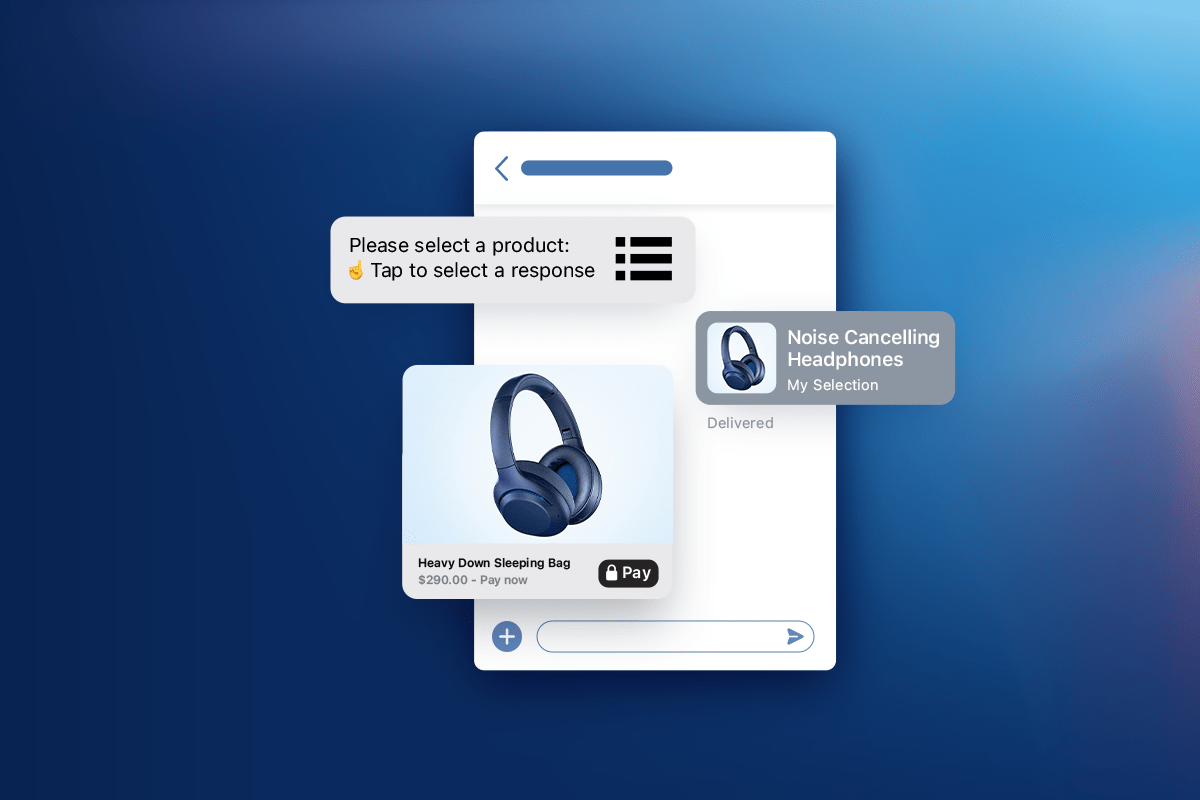
It gives businesses more ways to communicate than SMS alone. Messages can include rich media, verified business information, suggested replies, interactive buttons, and other features that help customers take action directly from a conversation.
For example, a retailer could send an order update with an image and suggested actions. A support team could use RCS to guide a customer toward the right answer without forcing them to switch channels.
The exact functionality available through RCS varies by device and network support. Businesses therefore need to account for customers who may still receive SMS or another fallback experience.
What is Google Messages?
Google Messages is the messaging app developed by Google LLC for Android devices. It supports SMS and MMS, while also giving compatible users access to RCS chats.
If you open Google Messages on an Android phone with RCS enabled, compatible conversations can automatically use RCS rather than traditional SMS. Users do not need a separate app just for RCS.
You can also manage these features from inside the app. Depending on the version of Google Messages, you can open the settings and tap RCS chats to view your connection status or change available RCS options.
Google Messages is therefore not another name for RCS. It is one of the apps that can use RCS to send and receive messages.
How RCS for Business works in Google Messages
For Android users, Google Messages is one of the main places where RCS for Business conversations appear.
When a business sends an RCS message to a compatible customer, the message can arrive in Google Messages alongside their regular conversations. The customer does not need to install a separate business messaging app.
The conversation can include verified sender information and rich media. It can also include suggested responses or actions that make it easier for the customer to reply or complete the next step.
From the customer’s point of view, the experience feels similar to opening a normal conversation in Google Messages. Behind the scenes, RCS determines which messaging features are available based on the user’s device, carrier, and RCS support.
This is also why RCS for Business should not be treated as something that only works inside Google products. The underlying technology is an industry standard, and support extends to compatible Apple devices and other apps. Google Messages is simply one of the most common ways Android users access it.
Who can receive RCS for Business messages?
A person can receive RCS for Business messages when their device, carrier, and messaging app support RCS. On Android, Google Messages is the most common native messaging app for RCS conversations. Support is also available on compatible Apple devices running supported versions of iOS.
RCS uses an internet connection rather than relying entirely on the cellular network used for traditional text messages. Customers therefore need mobile data through their data plan or a WiFi connection for RCS features to work.
Availability is not identical everywhere. RCS varies by country, carrier, device, and messaging app. Even two customers using the latest version of their phone software may have different access depending on their carrier.
Businesses can check whether a device is capable of receiving RCS before starting a conversation. Google recommends performing this capability check rather than assuming every contact can receive the same message format.
If RCS is unavailable, businesses can use SMS or MMS as a fallback where their messaging setup supports it. This helps maintain coverage without requiring every customer to use the same device or app.
RCS for Business features
RCS for Business gives companies far more flexibility than standard text messages. Instead of sending plain text with a link, brands can build conversations that combine content with interactive elements inside the customer’s messaging app.
Some of the main capabilities include:
- Rich cards: Combine images, video, text, and actions within a single message. Businesses can also combine multiple cards into a carousel.
- Suggested replies and actions: Give customers buttons they can tap to respond or perform an action without typing a reply.
- Verified business identity: Verified businesses can display their brand identity and a verification checkmark, giving customers another sign that they are talking to the correct company.
- Files and richer content: RCS for Business can support media and PDF files in addition to regular text.
- Read receipts and interaction data: Businesses can see whether supported messages were delivered or read and use that information to understand customer engagement.
These features can be helpful in many situations. A retailer might show a customer products inside a carousel, while a service business could let someone confirm an appointment directly from the conversation. Different companies can build very different experiences using the same underlying RCS standard.
RCS for Business consent, verification, and security
Businesses cannot simply start sending RCS messages to any phone number they have. Google’s policies require businesses to provide notice and obtain informed consent before soliciting users. Customers also need a clear way to withdraw that consent.
For example, users must be able to unsubscribe from business messaging. RCS for Business agents are required to process opt out requests, and Google Messages also provides unsubscribe controls for supported conversations.
Businesses also go through verification before an RCS for Business agent launches. An authorized contact at the company confirms the agent information and the messaging partner’s right to represent the brand. Once verification and launch are complete, Google Messages can display a verification checkmark next to the business name.
That verification should not be confused with encryption. RCS conversations between a business and a customer are not end to end encrypted in the same way as eligible personal RCS chats between Google Messages users.
These requirements give customers more context about who is contacting them and more control over the conversation. They also give businesses clear rules to follow when using RCS as a customer communication channel.
Google RCS messaging vs Google Messages: key differences
Google RCS and Google Messages are closely connected, but they are not the same thing. RCS is a messaging standard that adds chat features to traditional mobile messaging, while the Google Messages app is one of the apps that supports RCS chats. In practice, Google Messages gives Android users access to the RCS messaging experience alongside traditional SMS and MMS.
| Google RCS | Google Messages | |
|---|---|---|
| What it is | An industry messaging standard | A messaging app from Google |
| Purpose | Defines how compatible devices and networks send richer messages | Lets users send messages through RCS, SMS, and MMS |
| Device support | Available on Android and supported iPhones | Primarily used on Android devices |
| Rich media | Supports higher resolution photos, videos, and file sharing | Provides access to supported RCS rich media features |
| Chat features | Supports read receipts, typing indicators, and improved group chats | Lets users control supported RCS features from the app |
| Encryption | Encryption depends on the implementation and participants | Supports end-to-end encryption for eligible RCS chats between Google Messages users |
| Business use | Supports verified RCS conversations between brands and customers | Displays supported RCS business conversations to users |
RCS is a standard, Google Messages is an app
The biggest difference is simple. RCS is the technology behind the conversation, while Google Messages is an application that can use that technology.
RCS defines how compatible messaging services can send messages over mobile data or WiFi while supporting features beyond SMS and MMS. Google Messages uses the RCS standard to provide those capabilities on supported Android devices. RCS is also supported between Android devices and compatible iPhones, even though iPhone users are not using the Google Messages app.
This distinction also explains why users can turn RCS chats on or off within Google Messages. Turning RCS chats off does not disable Google Messages itself. Instead, the app can fall back to SMS or MMS when RCS is unavailable.
RCS adds richer chat features to Google Messages
When RCS chats are available, Google Messages can provide a much richer messaging experience than standard SMS.
Users can see typing indicators and read receipts. They can also send higher resolution photos and videos over an internet connection. RCS supports improved group chats as well, including additional controls when everyone in the conversation has RCS enabled.
These chat features come from RCS. Google Messages provides the interface where Android users access and manage them.
RCS handles rich media differently from SMS and MMS
Traditional SMS was designed primarily for text, while MMS added support for media with considerable limitations. RCS provides a better foundation for rich media, including higher resolution images and video.
Inside the Google Messages app, users can send messages containing this richer content when both sides support RCS. If RCS is unavailable, the conversation may use SMS or MMS instead, depending on the message and the user’s settings.
For businesses, RCS also supports branded conversations and verified sender information alongside rich media. Google currently positions RCS for Business as a way for brands to interact with customers across supported Android and iOS devices.
End-to-end encryption depends on who is messaging
RCS does not automatically mean every conversation has end-to-end encryption.
Personal RCS chats between Google Messages users are encrypted end to end by default when everyone in the conversation is using Google Messages with RCS enabled. This applies to eligible individual conversations and group chats.
The situation is different for businesses. Verified RCS chats between consumers and businesses are not end-to-end encrypted. These conversations can involve the business, its messaging provider, and carriers as part of message delivery.
Google Messages can work without RCS
Google Messages does not require RCS for every conversation. It can still send messages using SMS or MMS when RCS is unavailable.
That can happen when the recipient does not have RCS enabled or when device or carrier support is unavailable. Google Messages therefore acts as the messaging interface, while the protocol used to deliver a specific conversation can change depending on availability.
This is also why users may see options to turn RCS chats on in their Google Messages settings. Activating RCS unlocks the additional messaging features, while disabling it leaves SMS and MMS available.
RCS for Business brings business conversations into messaging apps
For brands, the difference becomes even more important. RCS for Business is built on the RCS standard and lets companies send branded messages with rich media and verified business information.
Customers can receive these conversations through supported messaging apps, including Google Messages. The Google Messages app is therefore the customer-facing interface on Android, while RCS for Business provides the technology businesses use to deliver the richer conversation.
How to get started with RCS for Business
Using RCS for Business involves more than turning on RCS in Google Messages. A business needs to create an RCS for Business agent, connect the infrastructure that will send and receive messages, test the experience, and submit the agent for approval.
The agent represents the company inside supported messaging apps. Businesses configure information such as the brand, agent name, region, use case, and billing category. The agent can then be connected to the systems needed to handle incoming and outgoing conversations.
Before launch, Google requires testing. An unlaunched agent can communicate only with designated test devices, allowing teams to find and fix problems before customers see them. You can think of this stage as beta testing for the messaging experience, although Google refers to these devices simply as test devices.
Once testing is complete, the business submits the agent for launch. The launch page asks for information about the agent and the countries or carriers where it will operate. Google, participating carriers, or both may then review the agent. Brand verification is also required before the first launch.
Companies do not have to build every part of this process themselves. An RCS for Business provider such as Quiq can handle the messaging layer while connecting RCS with existing customer service systems. This can be especially helpful for businesses that want to add RCS alongside other digital channels rather than operate each channel separately.
Once launched, customers can contact the business or receive approved business messages through supported apps such as Google Messages. From the customer’s perspective, the conversation stays on the same page as their other messaging activity, without requiring them to sign up for another app or join a separate community.
Get started with Google RCS through Quiq
RCS gives you a much richer way to talk to customers, but getting from the idea to a working channel still requires setup. Quiq supports Google RCS and can help with the registration process, configuration, testing, and launch.
Once RCS is live, you can manage those conversations through the same Quiq workspace you use for channels such as SMS, WhatsApp, Apple Messages for Business, and web chat. Both human agents and Quiq AI Agents can respond through RCS, while customers get the conversation directly inside their supported messaging app.
If you want to see how RCS can fit into your customer service or messaging strategy, book a demo with Quiq today.