Ecommerce customer service is different from general support. Shoppers expect fast answers about products, orders, shipping, returns, and stock, often while they are still deciding whether to buy.
The best ecommerce customer service tools connect support conversations with store data, so agents and AI systems can see what the customer ordered, what they are viewing, and where an order stands. Many also help with product recommendations, order changes, self-service, and support across chat, email, social messaging, and other channels.
In this guide, we compare the best ecommerce customer service software for 2026, including tools for Shopify-focused teams and larger brands that need AI agents, human support, and commerce data in one system.
TL;DR
- Quiq: Best for enterprise ecommerce brands that want AI agents, human support, conversational commerce, and messaging in one platform.
- Gorgias: Best for Shopify stores that want support tickets, order management, and ecommerce automation in the same workspace.
- Chatbase: Best for Shopify brands that want an AI agent focused on product discovery, cart assistance, and order support.
- Featurebase: Best for ecommerce teams that want customer support and customer feedback management in one platform.
- Hiver: Best for ecommerce teams that rely heavily on Gmail and want Shopify data available directly inside their support inbox.
- Tidio: Best for smaller and growing ecommerce stores that want live chat, AI support, product recommendations, and Shopify actions.
- HappyFox: Best for ecommerce businesses that need traditional help desk features alongside integrations with several commerce platforms.
- Intercom Fin AI: Best for Shopify brands that want an AI agent capable of both shopping assistance and post-purchase support across multiple channels.
- Zendesk: Best for larger ecommerce support teams that need advanced ticketing, routing, reporting, and omnichannel service.
- Freshdesk: Best for ecommerce teams that want affordable ticketing, Shopify order management, automation, and team collaboration.
- Kustomer: Best for ecommerce brands that want support built around a unified customer timeline instead of individual tickets.
- Help Scout: Best for ecommerce teams that want simple shared inboxes, Shopify order data, live chat, and self-service without a heavier enterprise platform.
Get the best agentic AI platform for ecommerce in 2026. Book a free demo with Quiq today.
The best support tools for ecommerce companies in 2026
Let’s compare the top ecommerce customer service tools based on their store integrations, support channels, automation features, and ability to handle common shopping and post-purchase requests.
1. Quiq

Quiq is a customer service platform built for enterprise brands that want AI agents and human support managed across the same customer experience stack. For ecommerce businesses, it can handle customer support operations across channels such as web chat, SMS, WhatsApp, Instagram, Facebook Messenger, and RCS while giving the customer service team access to order and shopping context.
Top ecommerce features
- Shopify integration: Quiq can pull in customer order history, shopping cart data, and browsing activity so agents have more context during sales and support conversations.
- AI agents: Ecommerce brands can use AI agents to handle common requests such as product questions, order updates, delivery issues, and other repetitive support conversations.
- Omnichannel messaging: Quiq brings conversations from web chat, SMS, WhatsApp, Instagram, Facebook Messenger, and other messaging channels into one workspace.
- Human agent handoff: Conversations can move between AI and human agents while keeping the customer context available, reducing the need for shoppers to repeat information.
- Conversational commerce: Agents can use shopping and order data during conversations to help customers choose products, complete purchases, and resolve post purchase questions.
Pricing: Quiq uses custom, usage-based pricing according to conversation volume. Public starting prices are not listed.
Book a free demo to find out what Quiq can do for your customer service operations.
2. Gorgias

Gorgias is an ecommerce customer service platform built primarily for Shopify merchants that want support tickets and store data in the same workspace. It gives agents direct access to customer profiles and order information, while its automation features can handle common customer queries before they reach a human agent.
Top ecommerce features
- Shopify order management: Agents can create orders, issue refunds, and cancel orders directly from Gorgias without opening Shopify separately.
- AI Agent: Gorgias can automate order tracking and other common ecommerce requests across chat and email, with pricing based on conversations the agent resolves.
- Customer self-service: Shoppers can check order status and shipping information without opening a support ticket, reducing repetitive requests for the support team.
- Shopping assistance: Gorgias can recommend products using browsing behavior and purchase information, giving brands another way to use a virtual shopping assistant during the buying process.
- Customer context: Shopify customer information appears alongside support conversations, helping agents personalize responses and improve customer satisfaction without constantly switching between systems.
Pricing: Gorgias pricing starts at $60 per month, with AI Agent usage charged separately based on resolved conversations.
3. Chatbase
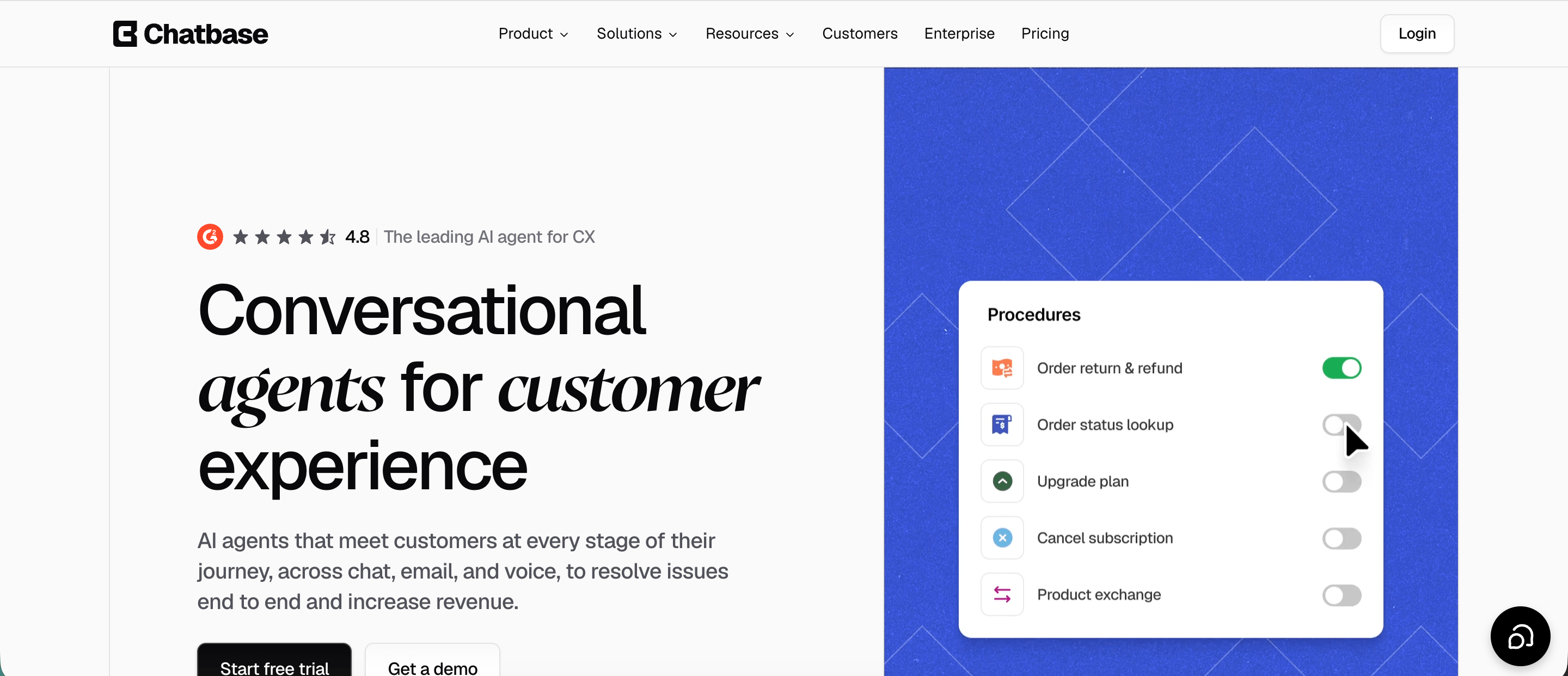
Chatbase helps ecommerce and enterprise support teams build AI agents trained on store content, help docs, support tickets, and business data. It is especially useful for brands that want AI to answer product questions, qualify leads, support orders, and hand off complex conversations across chat, email, WhatsApp, Messenger, Instagram DM, Slack, and voice.
Top ecommerce features
- Shopify workflows: Shoppers can ask product questions, get recommendations, view carts and orders, check order status, and update billing details through chat.
- Order support: Customers can get help with order status, purchase history, and order-related questions without waiting for an agent.
- Cart assistance: Chatbase can support cart-related conversations, including product details, quantities, prices, and totals.
- Customer account actions: Teams can support approved account and billing workflows inside the conversation.
- Omnichannel support: Chatbase works across website chat, email, WhatsApp, Facebook Messenger, Instagram DM, Slack, and voice.
- Human handoff: The built-in Help Desk lets agents review, assign, track, and take over conversations when AI should not handle the issue alone.
- Sales support: AI agents can qualify leads, collect customer details, guide shoppers to the right product, and route high-intent conversations to the right team.
Pricing: Chatbase has a free plan. Paid plans start at $32/month when billed annually, or $40 month-to-month.
4. Featurebase
Featurebase combines help desk software with customer feedback management, making it a good option for ecommerce brands that want support and feedback handled in the same system. Teams can manage customer conversations through its inbox, automate common support requests with Fibi, and turn issues raised during support interactions into trackable feedback.
Top ecommerce features
- Unified support inbox: Teams can manage live chat and email conversations from one inbox, with customer information available alongside each conversation.
- Fibi AI support agent: Fibi can answer customer questions using company knowledge and run custom actions through external APIs, giving ecommerce teams options for automating repetitive customer service requests.
- Self service help center: Brands can publish help articles and offer AI search so shoppers can find answers before contacting support.
- Customer feedback management: Agents can turn messages into feedback posts, attach customers to existing requests, and automatically update them when the status changes. This connects support with the wider ecommerce customer service experience.
- Support workflows: Featurebase can automatically route conversations, apply tags, send replies, and trigger customer satisfaction surveys after a resolution.
Pricing: Featurebase pricing starts at $29 per seat per month when billed annually, and a free plan is available. Fibi resolutions cost an additional $0.49 each.
5. Hiver
Hiver is a customer service platform built around email, with options for teams using Gmail as well as a broader omnichannel product. For ecommerce businesses, its Shopify integration gives customer support agents access to customer details and order information directly beside support requests, so they can manage customer interactions without constantly switching between their inbox and Shopify.
Top ecommerce features
- Shopify integration: Agents can see customer details and order history directly beside the support conversation, giving them purchase context before responding.
- Order support: Hiver gives agents access to Shopify order information and refunds from the support workspace, which is useful for common questions about deliveries and purchases.
- Shared inboxes: Ecommerce teams can turn addresses such as support@ into shared inboxes with ownership and routing rules for incoming requests.
- AI agents: Hiver AI agents can look up orders, issue refunds, and take actions across connected systems when handling common ecommerce requests.
- Omnichannel support: Hiver Omni brings email, live chat, WhatsApp, voice, and social conversations into one workspace, following the same principle behind an omnichannel messaging strategy.
- Customer portal: Customers can submit and track their own requests, giving stores another option alongside real time customer support for issues that do not require an immediate conversation.
Pricing: Hiver pricing starts at $25 per user per month when billed annually, with a free trial available.
6. Tidio
Tidio is a customer service platform for ecommerce brands that want live chat, automation, and AI support in one system. Its Shopify features are especially useful for stores that need to handle customer requests, offer personalized support, and connect service conversations with order and product data.
Top ecommerce features
- Lyro AI Agent: Lyro can answer product questions, handle common support issues, and escalate more complex conversations to a human agent when needed.
- Product recommendations: Lyro can recommend products based on shopper needs and cart contents, display product cards in chat, and let Shopify customers add recommended products directly to their carts.
- Shopify order management: Agents can view order history, cancel orders, issue refunds, and update shipping addresses directly from the Tidio inbox.
- Order status automation: Customers can check payment status, fulfillment details, purchased items, and tracking information without waiting for an agent.
- Multichannel support: Tidio supports customer conversations across website chat, Messenger, Instagram, WhatsApp, and email, while keeping product assistance consistent across those channels.
- Sales and team analytics: Ecommerce teams can track assisted sales, product recommendation performance, and team performance from the Tidio dashboard.
Pricing: Tidio pricing starts at $24.17 per month when billed annually, and a free plan is available.
7. HappyFox
HappyFox is a help desk platform for ecommerce businesses that want ticketing, automation, and store data in one support workspace. It connects with major ecommerce platform options including Shopify, WooCommerce, BigCommerce, and Magento, giving service agents order and customer data while they respond to shoppers.
Top ecommerce features
- Shopify customer and order data: Agents can view customer details and recent orders inside HappyFox tickets, search for specific orders, and see information such as lifetime order count and total spend.
- Multiple store support: Teams managing more than one Shopify store can switch between connected stores from within the same ticket interface.
- Ecommerce integrations: HappyFox connects with Shopify, WooCommerce, BigCommerce, and Magento so support teams can access commerce information without moving between several systems.
- Omnichannel customer service: HappyFox can bring customer conversations from email, chat, social media, and other support channels into the same service environment.
- Support automation: Routing rules, ticket automation, knowledge base tools, and self service options help teams deliver more efficient service when order questions and other requests start piling up.
- Customer experience reporting: Satisfaction surveys and reporting give ecommerce teams a way to monitor service quality and identify issues that could affect customer loyalty, alongside broader approaches to customer conversation analytics.
Pricing: HappyFox pricing starts at $24 per agent per month, and every plan includes a 14 day free trial.
8. Intercom Fin AI
Intercom Fin is an AI customer service agent that can handle both shopping assistance and customer support for Shopify stores. It can answer customer inquiries, recommend products, help shoppers compare options, and continue supporting them after purchase across multiple channels.
Top ecommerce features
- Shopify shopping assistant: Fin connects to a Shopify catalog so it can help shoppers discover products, narrow down options, and compare items based on what they are looking for.
- Cart actions: Shoppers can add products recommended by Fin directly to their Shopify cart without leaving the conversation.
- Ecommerce support: Fin can switch between shopping assistance and support within the same conversation, helping businesses cover more of the customer journey with a single agent.
- Multiple support channels: Fin can handle conversations through web and mobile Messenger, email, WhatsApp, SMS, Instagram, Facebook Messenger, and voice, giving ecommerce brands AI customer service across the support channels their shoppers already use.
- Human agent handoff: When Fin cannot resolve an issue, the conversation can be assigned to a human agent through Intercom’s inbox and ticketing system without losing the previous conversation context.
- Support automation: Fin can follow configured procedures and take actions in connected systems, giving ecommerce teams another way to automate repetitive service tasks within their wider business operations. For larger teams, this can form part of a broader contact center AI strategy.
Pricing: Intercom pricing starts at $29 per seat per month when billed annually, while Fin starts at $0.99 per outcome. A free trial is available.
9. Zendesk
Zendesk is a customer service platform for ecommerce businesses that need a mature ticketing system and support across several communication channels. It is a good fit for larger stores with higher ticket volumes, where routing, automation, and reporting can improve operational efficiency and keep response time under control.
Top ecommerce features
- Omnichannel support: Zendesk brings email, messaging, live chat, voice, SMS, and social conversations into one agent workspace, giving teams a single place to manage customer service across communication channels.
- Ticket routing and automation: Teams can automatically assign tickets using rules, triggers, and routing logic, helping customer requests reach the right agents faster.
- AI agents: Zendesk Suite includes AI agents that can resolve common customer questions automatically, which can reduce pressure on agents during periods of high ecommerce demand.
- Customer context: Agents can see customer information alongside each ticket, giving them more context before responding and reducing unnecessary back and forth.
- Reporting and analytics: Prebuilt dashboards track support activity and performance, including metrics that teams can use to monitor response time and identify service bottlenecks.
- Messaging workflows: Zendesk supports messaging conversations that can continue over time rather than requiring customers and agents to stay in a live session. Quiq explains how this model works in its guide to asynchronous messaging.
Pricing: Zendesk Support pricing starts at $19 per agent per month when billed annually, while Zendesk Suite starts at $55 per agent per month.
10. Freshdesk
Freshdesk is a customer support platform for ecommerce businesses that need ticketing, automation, self-service, and customer data in one workspace. Its Shopify integration is useful for stores that want agents to view order information and handle common post-purchase issues without constantly switching between their help desk and ecommerce platform.
Top ecommerce features
- Shopify order management: Agents can view current and previous orders, payment status, shipping information, and purchased products directly inside Freshdesk.
- Refunds and cancellations: Support teams can cancel orders and process full or partial Shopify refunds from Freshdesk, keeping common ecommerce service tasks inside the same workspace.
- Multiple store support: Ecommerce businesses running several Shopify stores can connect them to one Freshdesk account and access order information from the relevant store when handling a ticket.
- Self service: Stores can embed a knowledge base and contact form directly into Shopify, giving shoppers a way to find answers or submit requests without leaving the storefront. This can support the wider ecommerce customer service strategy.
- Team collaboration: Shared inboxes, internal threads, tasks, and integrations with Slack and Microsoft Teams help support staff coordinate on customer issues. Freshdesk also connects with tools such as HubSpot and Mailchimp, which can help support and marketing teams share more customer context across departments.
- Multichannel service: Freshdesk Omni can bring email, chat, social media, and other conversations into one inbox for retailers that need support beyond email. Quiq also covers practical ways to improve live chat adoption when chat is part of the service mix.
Pricing: Freshdesk pricing starts at $19 per agent per month when billed annually, with a free trial available. Freshdesk Omni starts at $29 per agent per month when billed annually.
11. Kustomer
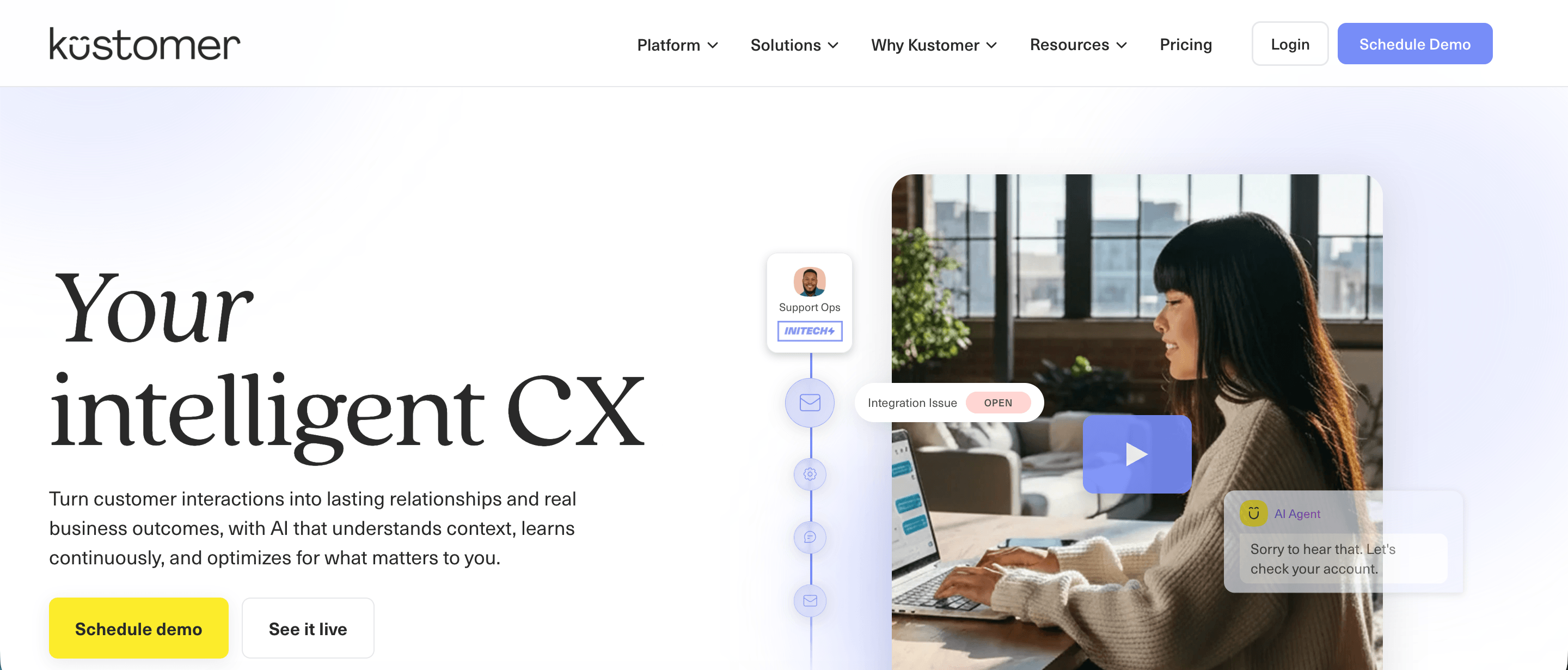
Kustomer is a customer service CRM and help desk solution built around a unified customer timeline rather than separate tickets. For ecommerce brands, it is especially useful when agents need purchase history and previous conversations from an online store in one place so they can provide more consistent support.
Top ecommerce features
- Shopify integration: Kustomer pulls Shopify orders and customer information into the customer timeline, allowing agents to process returns, exchanges, and other order related requests without leaving the platform.
- Unified customer timeline: Agents can see previous conversations and Shopify purchases together, giving them more context when responding to repeat customers. This also helps ecommerce teams personalize service based on customer history. Learn more about customer service personalization.
- Omnichannel service: Kustomer supports email, chat, SMS, social messaging, and voice in one workspace, helping stores maintain consistent support as customers move between channels.
- AI agents: Kustomer Concierge can automate common ecommerce requests such as order tracking and returns while using connected customer information during the conversation.
- Customer sentiment: Kustomer analyzes customer sentiment across messages and conversations, helping teams identify frustrated shoppers and prioritize interactions that may need attention. Quiq covers similar use cases in its guide to conversation analytics.
Pricing: Kustomer uses custom pricing based on each company’s setup and does not publish a standard starting price.
12. Help Scout
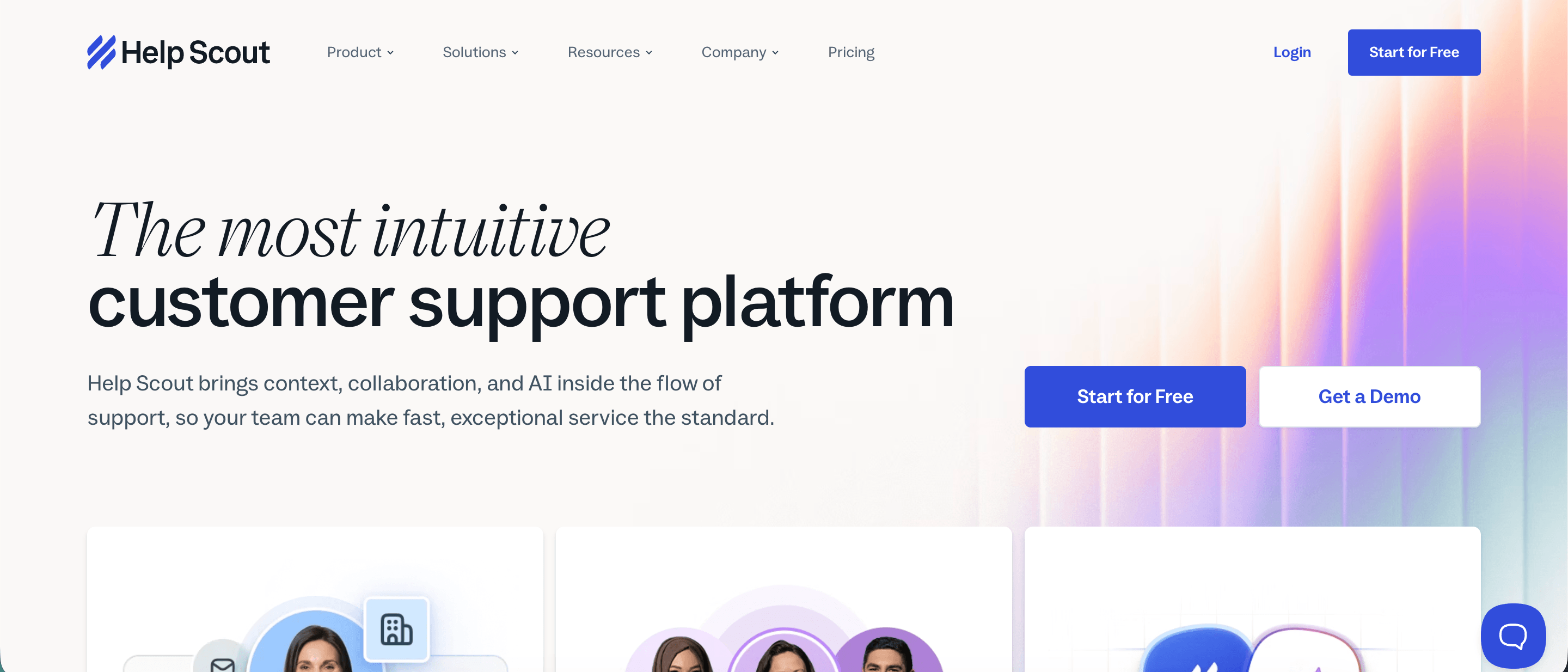
Help Scout is a customer support platform for ecommerce businesses that want shared inboxes, live chat, self-service, and Shopify order data in one workspace. Its Shopify integration is useful for stores that want agents to handle common order issues without constantly moving between the help desk and Shopify.
Top ecommerce features
- Shopify order management: Agents can view customer details and full order information, then refund, cancel, edit, or duplicate the most recent Shopify order directly from the Help Scout sidebar.
- Customer value data: Help Scout can display lifetime value, annual value, average order value, customer addresses, products purchased, and applied discounts alongside the support conversation.
- Live chat: Beacon lets ecommerce stores add live chat directly to their storefront, with conversations handled from the same Help Scout inbox as email support. For more on improving chat experiences, see Quiq’s guide to live chat best practices.
- AI Answers: Help Scout can use a store’s help content and website information to answer common customer questions through Beacon before a human agent needs to step in.
- Self service help center: Ecommerce brands can publish Docs content inside Beacon so shoppers can find answers while browsing the store instead of opening a new support conversation.
- AI assisted replies: AI Drafts can generate suggested responses using previous conversations and help center content, which can help agents respond faster during busy periods. This is similar to the broader real time agent assist model used in larger support operations.
Pricing: Help Scout pricing starts at $25 per user per month, and a free plan for up to five users is available. AI Answers costs $0.75 per resolution after the free trial.
Get the best AI platform for ecommerce customer support
The right ecommerce customer service software should do more than manage tickets. It should help shoppers find products, answer order questions, resolve support issues, and move naturally between AI and human agents when needed.
Quiq is built for brands that want to bring those experiences together across messaging channels, with AI agents handling high volume customer conversations and human agents stepping in when the situation calls for it. Its focus on conversational commerce also makes it a strong option for ecommerce teams that want support to contribute directly to the shopping experience rather than sit separately from it.
If you are comparing ecommerce customer service tools and want to see how Quiq could fit into your support operation, book a demo with Quiq today.