Key Takeaways
- Generative AI is reshaping travel customer experience. Travel brands are using generative AI to deliver faster, more personalized support across booking, in-trip assistance, and post-travel engagement.
- Not all AI solutions are created equal. Rule-based chatbots can’t handle the complexity of modern travel experiences, while generative and agentic AI can reason, adapt, and resolve issues in real time.
- Agentic AI unlocks real operational impact. By assigning specialized AI agents to tasks like disruption management, bookings, and loyalty support, travel brands can automate outcomes, not just conversations.
- Trust, accuracy, and integration are critical. Successful generative AI deployments depend on secure data handling, reliable system integrations, and transparent handoffs between AI and human agents.
- Early adopters will set the new customer experience standard. Travel brands that invest in agentic AI today are better positioned to scale support, improve customer satisfaction, and stay competitive as traveler expectations rise.
For decades, the travel industry has operated on a simple premise: complexity is the customer’s problem. If a flight is canceled, the traveler waits on hold. If a booking needs changing, the traveler navigates a maze of policies. If a bag goes missing, the traveler chases answers.
But the tolerance for that friction is gone. Travelers today expect immediate, personal, and accurate resolutions.
Generative AI has emerged as the technology capable of meeting this demand, shifting the industry from reactive support to proactive care. According to recent research from Amadeus, traveler usage of generative AI for planning has jumped 64% in just one year. The appetite is there. Customer experience leaders no longer question whether to adopt this technology, but how to deploy it safely and effectively to drive real business value.
What is Generative AI in the Travel Industry?
To cut through the noise: Generative AI in travel isn’t just a better chatbot. It is a fundamental shift in how systems process and generate information.
While traditional rule-based chatbots rely on decision trees — if customer says X, reply with Y — generative AI uses large language models (LLMs) to understand intent, reason through complex queries, and generate unique, conversational responses in real time.
It differs from traditional automation in its ability to handle ambiguity. In travel, where no two trips (and no two disruptions) are exactly alike, this flexibility is critical. Unlike predictive AI, which analyzes historical data to forecast trends (like pricing surges), generative AI creates new content and interactions.
It’s uniquely suited for the travel sector because it thrives in high-volume, information-dense environments. When a traveler asks, “Can I change my flight to the evening one, and will I lose my upgrade?”, a rule-based bot fails. Generative AI reviews the policy, checks availability, understands the nuance of the upgrade status, and formulates a coherent answer.
How Generative AI is Transforming Travel
The shift improves the quality of the journey itself in three big ways:
1. From Static Support to Dynamic Experiences
The days of forcing high-value customers through rigid IVR menus or static FAQ pages are numbered. Generative AI allows for fluid, context-aware conversations.
Consider the difference in experience:
A static system forces a user to select “Baggage” from a menu. A generative system understands, “My golf clubs didn’t arrive in Denver,” and immediately triggers a specific tracing workflow while empathizing with the frustration. It understands the traveler’s intent — whether it’s an urgent disruption or a loyalty inquiry — without requiring them to speak a “keyword” or match a specific phrase.
2. Global Customer Engagement
Travel is inherently global, but support teams often aren’t. Generative AI bridges this gap by offering 24/7 multilingual support that goes beyond basic translation.
For example, when Quiq partnered with Accor, they deployed an AI agent capable of fluent engagement in English, French, German, Arabic, Spanish (Euro & Latam), Portuguese (Euro & Brazilian), Dutch, and Italian. This didn’t just mean translating words. It meant understanding cultural nuances and context across languages. The result was a support system that felt native to the guest, regardless of where they came from.
3. Proactive vs. Reactive Service
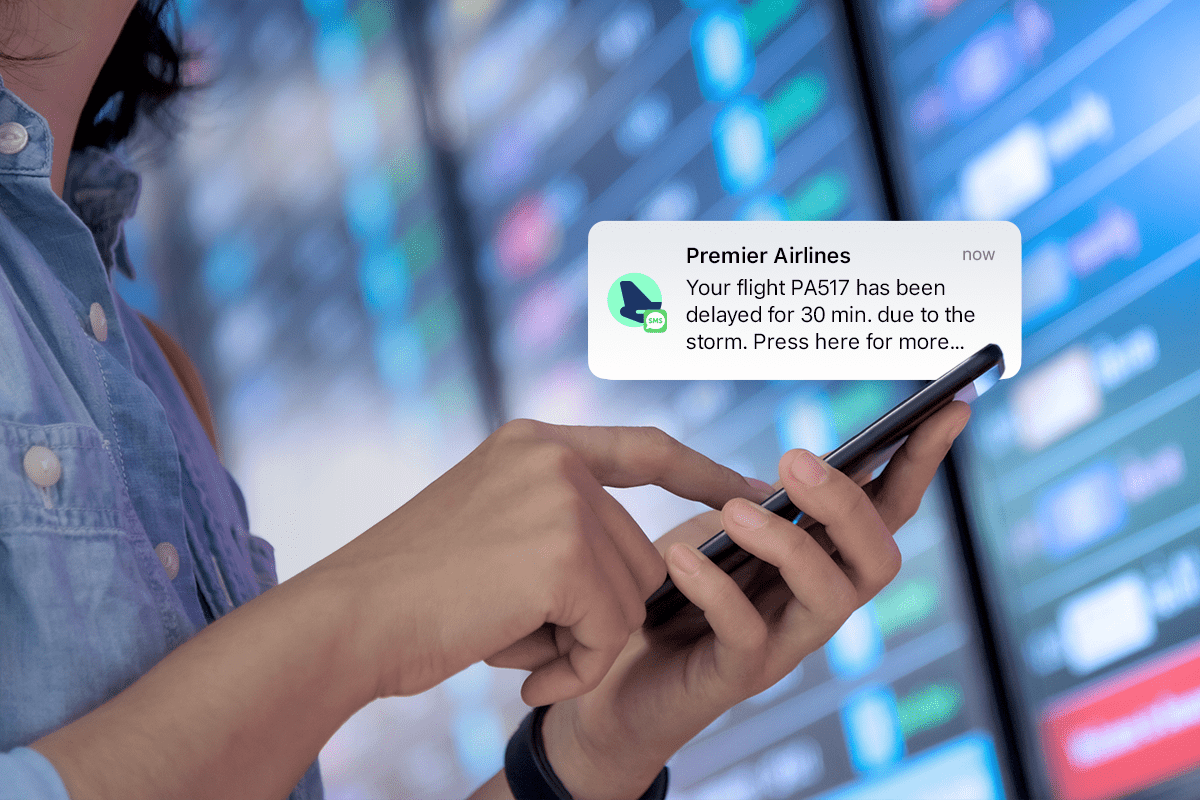
The most significant transformation is the move toward proactive service. Instead of waiting for a customer to call about a delayed connection, generative AI systems can anticipate issues and integrate with flight operations data to message the traveler before they even land: “Your connecting flight was delayed 45 minutes. We’ve rebooked you on the 6:15 flight at no charge, and you’ll receive a complimentary beverage.”
This reduces inbound contact volume by resolving problems before they become complaints.
Read our 2026 State of AI Agents in Travel & Hospitality. Get guide >
Key Benefits of Generative AI in Travel
For customer experience leaders, the value of generative AI is measurable in operational metrics and customer sentiment.

Faster Resolutions at Scale
Speed is the currency of customer service. Generative AI reduces Average Handle Times (AHT) for both common and complex requests.
In the airline industry—where operational complexity is constant—Quiq helped Spirit Airlines implement an agentic AI agent. The result was an automated resolution rate of over 40%, with conversation times that are 16% faster. And by automating routine inquiries, the system freed up human agents to focus on more complex issues.
Personalized Travel Journeys
Personalization has historically been difficult to scale. Amadeus research indicates that 37% of travelers cite personalized recommendations as a key benefit of AI.
Generative AI can ingest a traveler’s history, loyalty status, and current context to tailor every interaction. It doesn’t just suggest “hotels in Paris”. It suggests “boutique hotels in Le Marais near your last stay, available for your dates next week.”
Operational Efficiency & Cost Savings
The operational impact is stark. By deflecting repetitive inquiries — like “what is my baggage allowance?” or “when is breakfast served?” — brands can significantly lower their cost per contact.
The Accor partnership demonstrates this efficiency in action. Their generative AI agent handled a massive volume of guest inquiries, allowing the brand to scale support without linearly scaling headcount.
Improved Customer Satisfaction & Loyalty
There is a misconception that automation kills satisfaction. The data suggests the opposite: good automation builds loyalty.
In the Accor case study, the deployment of a competent generative AI agent didn’t just deflect tickets. It raised Customer Satisfaction (CSAT) scores from 67% to 89%. When guests get fast, accurate answers — even from a machine — they are happier.
Use Cases for Generative AI in Travel
Booking & Pre-Trip Support
The booking phase is often riddled with anxiety. Is this the right hotel? What if I need to cancel?
Generative AI acts as a concierge. Booking.com’s AI Trip Planner and Expedia’s ChatGPT integration are prime examples of this. They allow travelers to ask open-ended questions like, “I need a family-friendly resort in Bali with a kids’ club,” and receive curated options with deep links to booking.
For Accor, their AI agent drove a tangible business outcome: intent-to-book click-outs doubled. By answering pre-stay questions accurately (“Is the pool heated?”, “Do you have vegan options?”), the AI removed hesitation and drove revenue.

In-Trip Assistance & Disruption Management
This is the high-stakes environment where AI shines. When a flight is cancelled or a hotel room isn’t ready, emotions run high.
Generative AI can handle rebooking during mass disruptions — a scenario that typically crashes call centers. It provides real-time updates and “next-best actions” to thousands of travelers simultaneously, something human teams simply cannot do at scale.

Loyalty, Rewards, & Account Management
Loyalty programs are notoriously complex. Generative AI simplifies them. Instead of a traveler reading a PDF to understand blackout dates, they can simply ask, “Can I use my points for a flight to Tokyo next month?” The AI reviews the specific tier benefits and provides a clear answer, potentially identifying an upsell opportunity in the process.

Post-Trip Support & Retention
The journey doesn’t end at checkout. Generative AI handles the tedious administrative tail of travel — refunds, invoice requests, and lost-and-found reports. By automating these tasks, brands ensure the final touchpoint is efficient, leaving a positive lasting impression that encourages retention.

Challenges of Generative AI in Travel
While the benefits are clear, the risks are real. Customer experience leaders must approach deployment with eyes wide open.
Accuracy & Hallucination Risks
Trust is hard to gain and easy to lose. A major concern with LLMs is “hallucination” — confidently stating false information. In the Amadeus study referenced above, 25% of travelers reported experiencing outdated or inaccurate information from AI.
In travel, a hallucination isn’t just a funny quirk. It’s a stranded passenger. If an AI incorrectly states that a visa isn’t required, the brand is liable. Success requires grounding the AI in trusted, verified knowledge bases and implementing strict guardrails.
Discover how Quiq prevents hallucinations here:
Data Privacy & Security
Travel companies hold a treasure trove of sensitive data: passports, credit cards, and PII. Using public tools like ChatGPT carries risk, so companies in the hospitality industry should be aware of the dangers of feeding guest data into public tools.
Enterprise-grade deployments must ensure that data remains secure and compliant with global regulations like GDPR. The AI solution must act as a vault, not a sieve.
Integration with Existing Systems
An AI that can chat but can’t act is just a toy. For generative AI to provide value, it must integrate deeply with reservation systems (PMS/GDS), CRMs, and loyalty platforms.
It needs to know who the customer is and what their booking looks like. Without this, the AI creates “islands” of conversation that don’t connect to operations.
Trust & Adoption
There is a delicate balance between human and machine. Travelers need to know when they are speaking to an AI. Transparency is non-negotiable.
Furthermore, the goal is to enhance human agents, not replace them. The most successful models use AI to handle the routine, handing off to humans with full context when empathy or complex judgment is required.
How Leading Brands Are Using Generative AI in Travel
The most forward-thinking brands are moving beyond simple Q&A bots. They are adopting a new framework: Agentic AI.
Agentic AI vs. Generative AI
To understand the future of travel customer experience, you must distinguish between two concepts:
- Generative AI focuses on understanding and responding. It uses large language models to interpret intent and generate human-like responses, recommendations, and summaries. It excels at making conversations feel natural.
- Agentic AI goes a step further by taking action. It combines generative AI with decision-making, tools, and workflows. Specialized AI agents can reason, execute tasks, collaborate with other agents or humans, and resolve issues end-to-end — not just talk about them.
Discover details on the differences in our guide: LLM vs Generative AI vs Agentic AI: What’s the Difference?
Where Agentic AI Fits In
Agentic AI represents the shift from “conversation” to “resolution.” In a travel context, a generative AI agent might tell you how to change a flight. An agentic AI agent will change the flight for you, issue the new ticket, and charge the difference to your card.
It involves orchestration between AI agents and live support teams. An AI agent might handle the rebooking, while a human agent steps in to handle the customer’s anxiety about missing a wedding.
How Quiq Enables Agentic AI in Travel
Quiq’s platform is built on a multi-agent architecture purpose-built for customer experience in travel and hospitality. Instead of “black box” A, we offer:
- Secure Deployment: We verify before launch. Every agent is tested and governed.
- Seamless Handoff: When a situation escalates, the human agent steps in with the full conversation history. The context is continuous.
- Transparency & Real-Time Insights: We show our work. You see exactly how decisions are made, giving you the confidence to scale.
Learn more about what sets Quiq’s agentic AI for travel and hospitality apart from other vendors.
A New Era in Travel
Generative AI is redefining how travel brands engage, support, and retain travelers. We are moving away from the era of static menus and long hold times into an age of instant, personalized resolution.
However, the biggest gains won’t come from standalone chatbots that simply chat nicely. They will come from agentic AI — systems that can take action and resolve problems. Success depends on trust, tight integration with your data, and intelligent orchestration between humans and machines.
Early adopters like Accor and Spirit Airlines are already setting the new standard. Those who invest in agentic AI agents today will be the ones who define the traveler experience of tomorrow.
Frequently Asked Questions (FAQs)
What is generative AI in the travel industry?
Generative AI in travel uses large language models to create human-like responses, recommendations, and actions for travelers, enabling personalized booking support, real-time assistance, and automated customer service across channels.
How is generative AI different from travel chatbots?
Traditional travel chatbots follow predefined rules and scripts, while generative AI understands intent and adapts responses in real time. Going further, agentic AI can handle complex, multi-step travel requests like rebooking flights or resolving disruptions.
How does generative AI improve the travel customer experience?
Generative AI improves travel customer experience by delivering faster responses, personalized recommendations, 24/7 support, and consistent service across channels, especially during high-stress moments like delays or cancellations.
What is agentic AI, and why does it matter for travel?
Agentic AI refers to AI systems made up of specialized agents that can reason, take action, and collaborate. In travel, agentic AI enables end-to-end issue resolution, such as rebooking, notifications, and follow-ups, without relying solely on human agents.
What are the most common use cases for generative AI in travel?
Common use cases include booking assistance, itinerary changes, disruption management, loyalty and rewards support, multilingual customer service, and proactive travel notifications before issues escalate.